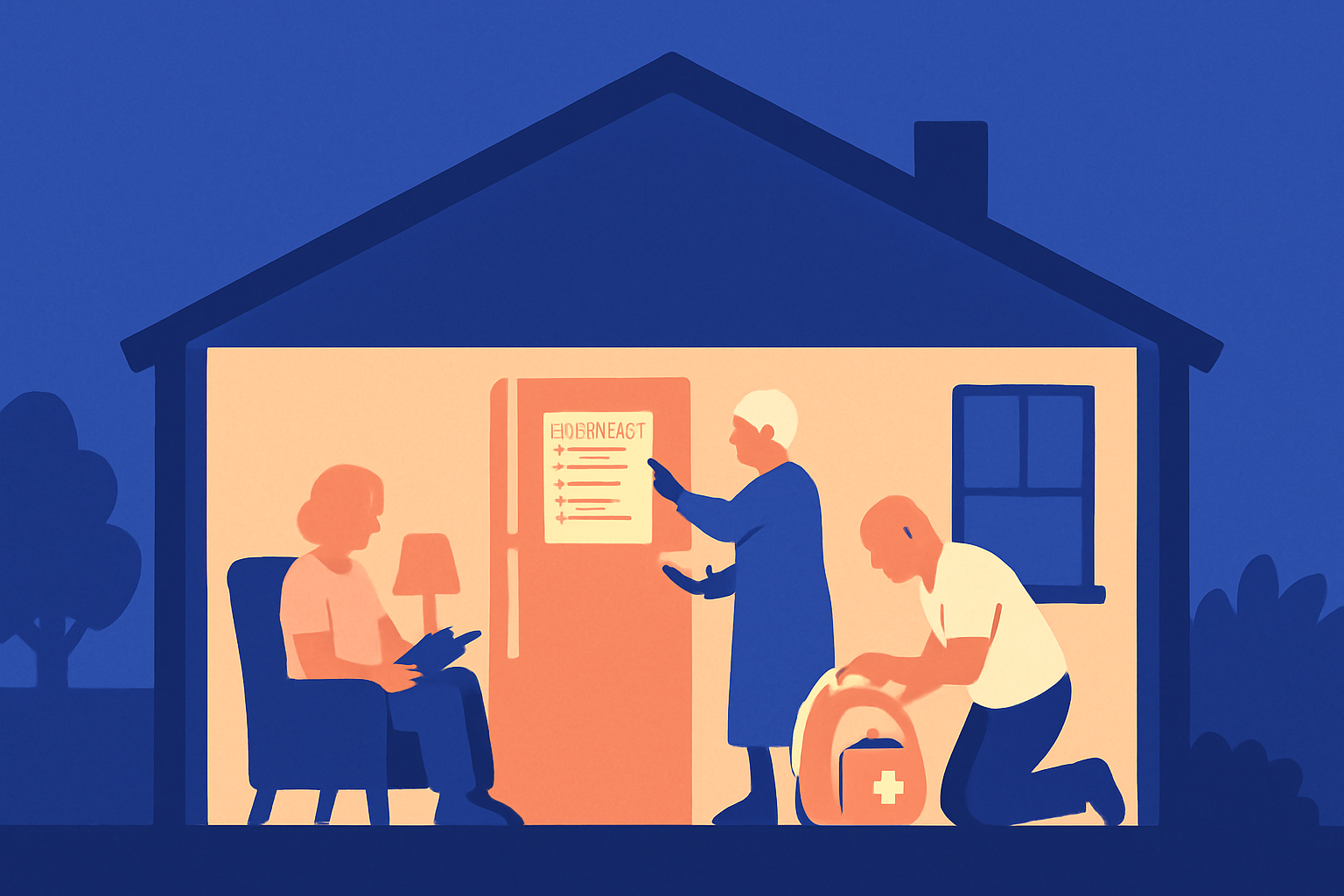
An older adult at home is at higher risk in three categories of emergency: a power outage that takes out the heating or cooling and the medical equipment; a storm or evacuation that requires leaving on short notice; and a fall, a fire, or a medical event when no one else is in the house. None of the three is unusual. All three are solvable with a plan that fits on a single page on the fridge.
This is the practical emergency-preparedness plan for older adults aging in place. The fridge sheet, the go-bag, the contact tree, and the technology that actually helps in a crisis. Most of it is a Saturday afternoon and under one hundred fifty dollars. All of it is dramatically easier to put in place when nothing is happening than when something is.
The fridge sheet
A laminated one-page emergency-info sheet on the fridge does more work than any other single item in the home. Paramedics know to look for it. Adult children call about it. New aides see it the day they arrive. It is the cheapest, highest-leverage emergency document in the house.
- Full legal name and date of birthPlus a current photo if the older adult is okay with one.
- Medical conditions and allergiesIn plain language, not codes. "Heart-rhythm condition, no penicillin, no shellfish."
- Current medications and dosagesA current list with the pharmacy phone. Updated whenever the medications change. The single most useful five minutes a family caregiver does per quarter.
- Primary doctor, specialists, hospital preferenceWith phone numbers and the date of the last visit if recent.
- Insurance card numbersMedicare, supplement, Medicaid (where applicable), long-term-care. Copies in the go-bag too.
- Two emergency contacts in priority orderA local one and a long-distance one. With at least two phone numbers each.
- Advance-directive status and where the document isHealthcare proxy, POLST or MOLST if applicable, and where the originals live.
The go-bag
A simple go-bag in a labeled clear plastic bin in the front closet covers the evacuation case — a storm, a fire, an extended power outage. The bag is not for catastrophes; it is for the ordinary version of leaving the home on short notice. Most older adults need to be able to handle 72 hours away from home with what is in this bag.
- Three days of medicationsIn a small labeled organizer, with the most recent pharmacy printout. Refresh quarterly.
- Copies of the fridge sheetAnd copies of insurance cards, Medicare card, ID, the advance directive, and a recent photograph.
- A flashlight, a small first-aid kit, a battery-powered radioWith spare batteries for each. A hand-crank radio costs about $30 and is rated for hurricane and wildfire seasons by most preparedness organizations.
- A small amount of cash and a phone chargerPower outages take down the card readers and sometimes the cell network. A backup battery pack for the phone, charged quarterly, is worth its small cost.
- Comfort itemsReading glasses, a hearing-aid spare battery, a sweater, a favorite small object. A go-bag that contains only emergency items is hard to use; one that contains a few familiar things is easier to grab.
- A water bottle and shelf-stable snacksFor evacuation centers, hospital waits, and the long delays that follow most regional emergencies.
The contact tree
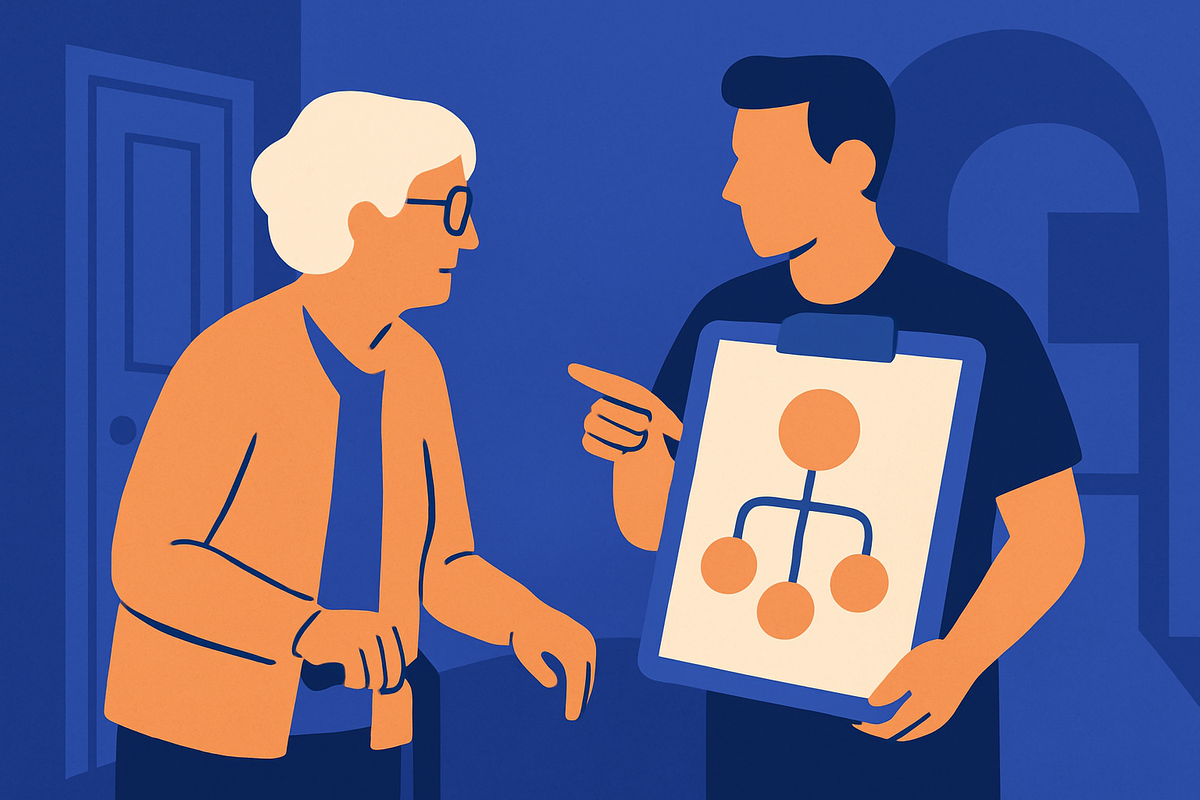
A short written list of who calls whom in an emergency, posted next to the fridge sheet. Most families have an implicit tree; writing it down catches the assumptions. A workable structure: one local contact (a neighbor, an aide, or a nearby adult child) who reaches the home or the older adult; one family contact who coordinates the rest of the family from a distance; and one professional contact (the primary-care office, the home-health agency, the building manager) who handles the operational side. The tree is a one-page document, not a complicated org chart.
Power and medical equipment: If the older adult uses oxygen, a CPAP, an infusion pump, or any other powered medical equipment, contact the utility's medical-baseline or priority-restoration program before the next storm season. Most U.S. utilities maintain a registry; enrollment is free, and the utility prioritizes restoration to households on the registry during outages. The American Red Cross power-outage checklist is the right starting point.
Technology that actually helps
Three categories of technology earn their keep for most older adults.
- A medical-alert pendant with a fall-detection sensor — the modern devices work over cellular, do not require a base station in the home, and can be worn in the shower.
- A smart smoke and carbon-monoxide detector that texts a family member when it goes off, in addition to sounding the alarm.
- A simple smart speaker with a voice-call feature, set to call a named contact on a voice command — useful in the moments when a hand cannot reach a phone but a voice can reach a speaker.
What to skip: any device that requires the older adult to charge a remote on a schedule, swap a battery weekly, or update an app to keep working. The right test for any safety technology is whether it still works on the worst day, not the best one.
The fridge sheet, the go-bag, and the contact tree share information with the room-by-room home-modification checklist and the senior lighting and home safety piece — running the three together gives most families a calmer Saturday than they expect. The full housing-decision walkthrough sits at the stay-or-move decision guide, and the broader pillar lives at the Aging in Place & Moving hub.
Sources
About this post: Originally inspired by Cyndie Taylor's writing at taylormademoves.com — this is a fresh, expanded version written for the Aging Sidekick audience, not a republication.
Read Cyndie's original piece on taylormademoves.com — and find more of her writing on senior moves and aging in place at taylormademoves.com.
Run a 3-minute home safety audit
Walk through your parent's home one room at a time — kitchen, bathroom, bedroom, stairs — and Aging Sidekick flags the fall-prevention changes that matter most. Free, no signup needed for the audit itself.
Start the safety auditSee the full Aging Sidekick plan →