"They're sending Mom home tomorrow." Here's the next 48 hours.
Aging Sidekick gives you the questions to ask the case manager, a home-care plan to plan for a safe discharge, and a place to put the paperwork.
Aging Sidekick complements, not replaces, your care team. In an emergency, call your local emergency number.

Planning for a safe discharge home
It’s often a relief to hear that we can leave the hospital and go home. We feel better at home - we’re more comfortable, we can rest, and we have our favorite people and things. Many times, when we’re preparing to leave the hospital, we’re focused on what medications we need to get from the pharmacy, what follow-up appointments we need, and the medical discharge instructions.
We often overlook the day-to-day care needs that are common. When we’ve been hospitalized, we might have changes in mobility, we might be weak or confused from medications, and we might have restrictions on lifting, bending, walking, driving, or even what we can eat. This results in us needing help - from a few days, to a few months - with day-to-day tasks like shopping, housekeeping, bathing, getting dressed, taking care of pets, and more.
The hospital’s social worker (also called a discharge planner) can help you identify how any restrictions or changes will impact your day-to-day activities. They can help you identify where you’ll need help, so you can begin making plans to have friends, family, or local services help out.
Ask to speak with the discharge planner, and request a “care plan meeting”. This is a meeting with your medical care team and the discharge planner. During the meeting, ask, “Can you tell me what limitations or restrictions are going to create challenges in me being able to do daily tasks on my own? Where do you expect I will need someone to help me with ADLs or IADLs?”.
What to do when the discharge clock starts
You might be given a short window to plan for a discharge home - possibly less than 24 hours, in some cases. The discharge planner will be coordinating the medical follow-up appointments, discharge instructions, medications, and any medical equipment - all of which are key to your recovery. In addition, you can talk with the case manager about a daily care plan to ensure your loved ones' daily needs are met.

Walk in with questions. Walk out with a plan.
Making the time to talk with the case manager will help to ensure you're prepared for a safe discharge.
- Ten questions to ask
- A printable Daily Care Plan to review with the case manager
- Organizing the discharge summary and the new med list
What it looks like inside
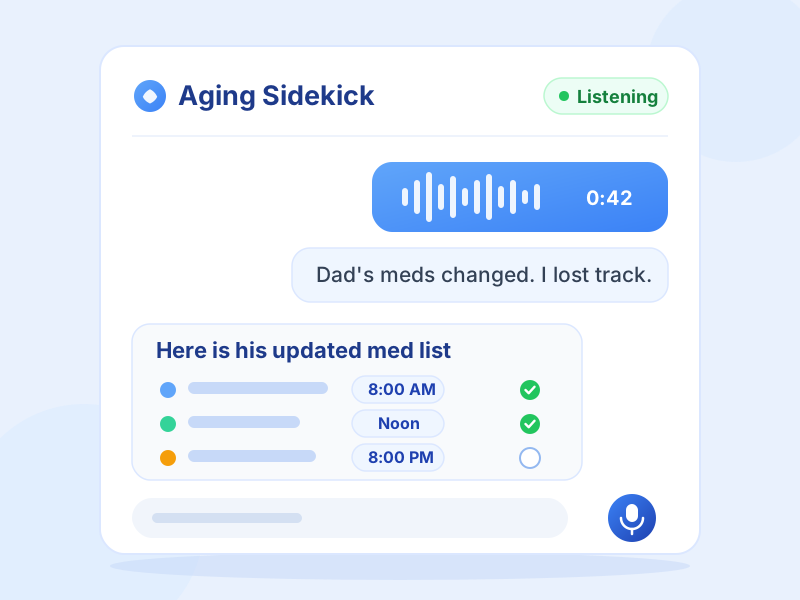
Voice intake — 15 minutes
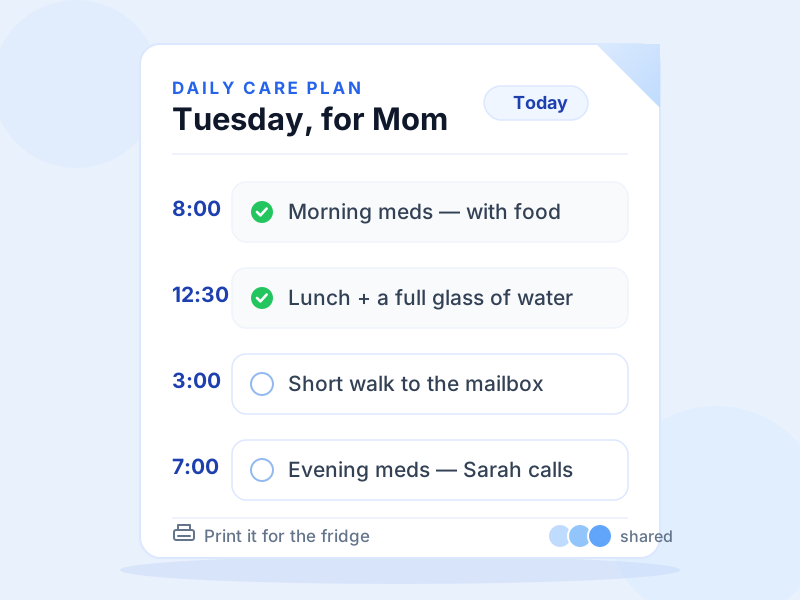
Printable Daily Care Plan
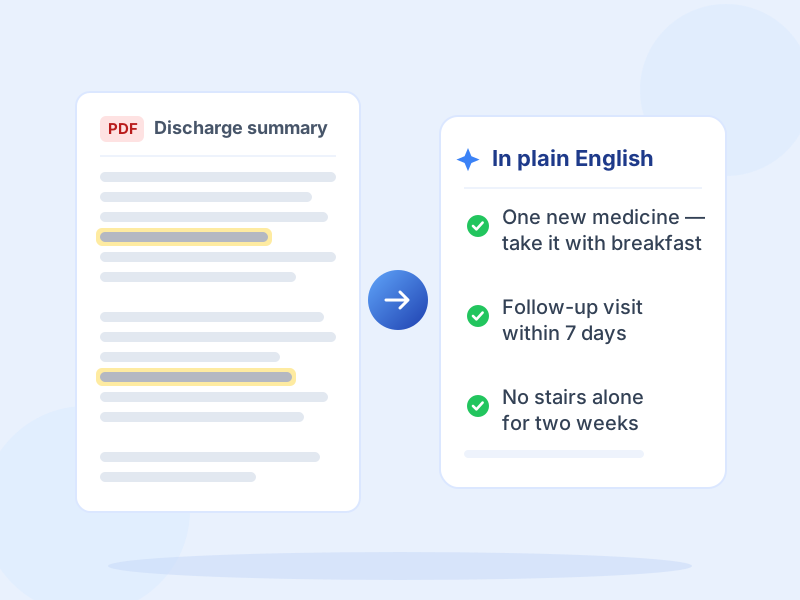
Plain-English discharge summary
Understanding Medicare's 3-day rule
Some illnesses and injuries require an inpatient rehab stay after hospitalization to help us recover and regain our strength and mobility. Original Medicare covers a stay at a rehab center - also known as a skilled nursing facility (SNF) - after a hospital stay if your loved one was inpatient at the hospital for at least three consecutive days. The midnights are counted starting the day they were admitted as an inpatient — the day of discharge does not count.
If you’re expecting your loved one to recuperate in rehab, talk with the care team. One thing to ask is: “Will my family member qualify for rehab, based on Medicare’s 3-day rule?” Time spent in the hospital under “observation status” does not count toward the three-day requirement, even if your loved one was in a hospital bed the whole time. Ask the case manager: “Is my mother admitted as an inpatient, or is she under observation?”
Additional key questions are, “Do you expect my family member to need an inpatient rehab stay? If not - what does recovery look like, and what treatment will they need after they leave the hospital?”
Sources: Medicare.gov — SNF coverage · NIA — hospital discharge planning · AARP — observation status.
What caregivers tell us
My dad (early 80s) was discharged from the hospital yesterday … they also diagnosed him with malnutrition. He is now down to 130 pounds … Now that he's home, he's acting like this is still a medical facility.
10 questions to ask the hospital case manager
A printable, plain-English checklist of the ten questions to ask before discharge — diagnosis, medication changes, follow-up provider, equipment, after-hours nurse line, and what an unsafe discharge looks like.
Caregivers ask these the most.
How do we know what to do after discharge?
My loved one seems more confused than before. Is that the medication?
I cannot remember what the nurse said about the wound dressing.
Should we go to the emergency room or wait for the doctor?
Start your loved one's plan free — takes 15 minutes.
Free to start, no card required. Upgrade to Premium for more voice time.