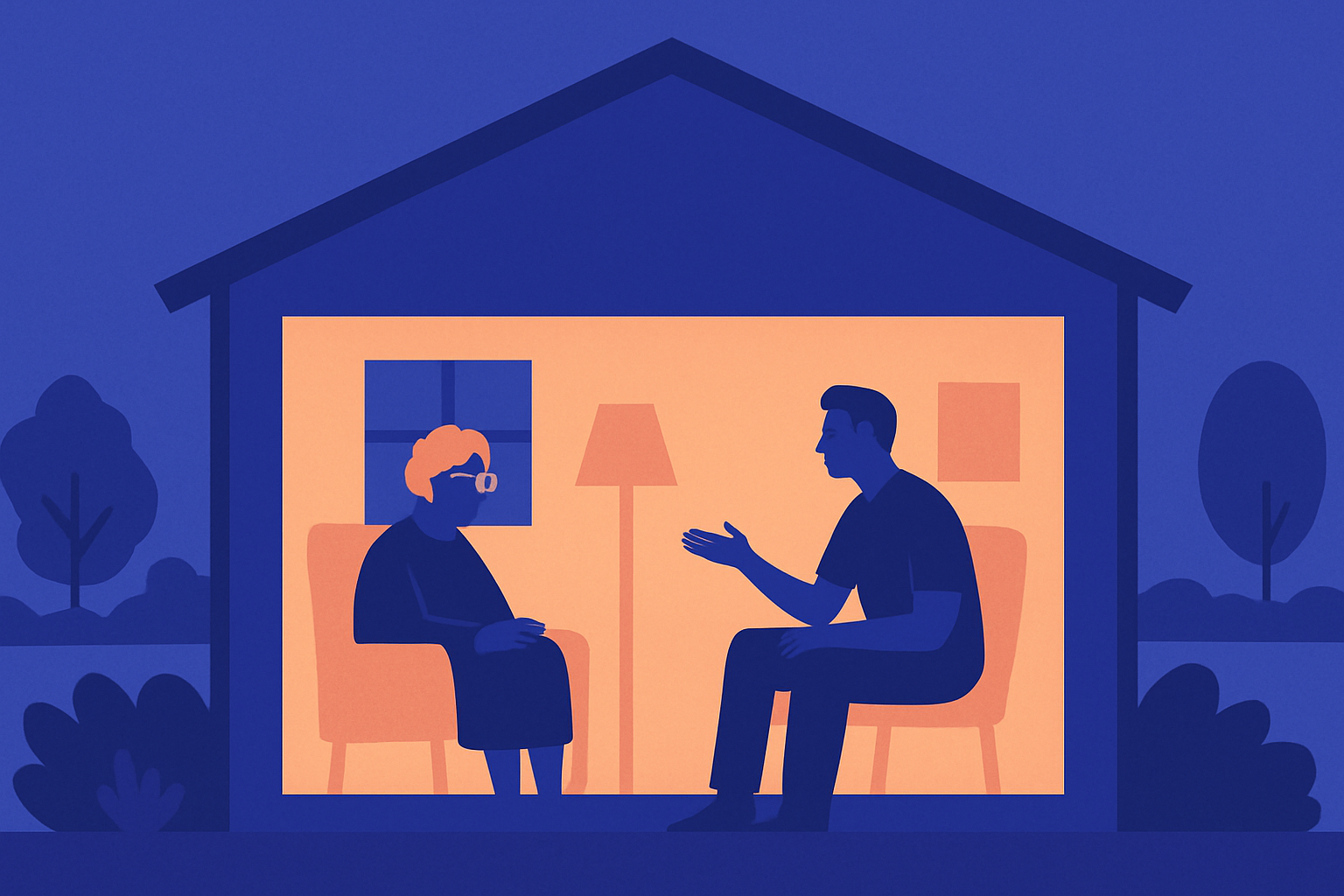
Family discussions about moving an aging parent can be filled with emotion and tension, that isn’t really about a possible move. The emotion is about what the move represents — a loss of control, an admission that something has changed, a fear that the children are deciding for the parent. The conversation works dramatically better when it starts a year before the move is needed, in the living room, with a cup of tea, and not in a hospital room with a discharge planner waiting in the hallway.
This is the version of the right-sizing conversation I open with families on the first visit. It is calm, it is repeatable, and it almost always ends with the older adult — not the family — making the call. The point of the conversation is not to deliver a decision. It is to make the decision possible.
Start with curiosity, not a proposal
The first conversation is for listening. Ask what challenges your parent has been noticing lately — managing the stairs, getting through winters, about the house feeling bigger or smaller than it used to. Many older adults have been quietly turning the question over for months and are relieved when someone opens the door without pushing them through it. The first 'we should talk about moving' is rarely the first time the older adult has considered it; it is the first time someone in the family did.
Three opening sentences that work, in my experience.
- 'I have been wondering how the house feels lately — what's been on your mind?'
- 'I noticed the front step is getting harder for you. Is that the kind of thing you have been thinking about?'
- 'A neighbor of mine just moved their parents into an independent-living place down the road, and I have been curious what you'd think about somewhere like that.'
None of them is a proposal. All three open a door.
Three sentences to avoid
Some sentences end the conversation, often for months. 'You have to.' 'It is time.' 'We have already decided.' Each one shifts the older adult from a participant into a defendant, and the door closes. The sentence that opens it back up is some version of, 'Help me understand what would make this feel like your decision.' The honest answer is usually a short list, and most items on that list are easier to give than the family expects — to keep the dog, to bring the dining-room chairs, to be near a particular friend, to have a window that faces east. Treat that list as a contract. It is.
Use facts as the spine of the second conversation
The second conversation is for numbers. Bring them in writing — a single page is plenty — and use them to take the conversation off the older adult's body and onto the household's spreadsheet.
- The cost of a senior communityIndependent living, assisted living, or a CCRC nearby — the monthly figure, and what is included. Most older adults expect the number to be more frightening than it actually is, especially compared to the next item.
- The cost of one year of the modifications the house would needBathroom, entry, stairs, kitchen — priced honestly by a contractor, not by Pinterest. The audit is the spine of this number.
- The equity in the current homeA short conversation with a real-estate agent, ideally one with the SRES designation, gets you a defensible figure. Many older homeowners do not realize how much the equity changes the math.
- The hours of family help each week, with a number on itMultiply by an hourly cost the family could honestly pay for replacement care. The unpaid hours are the largest hidden cost in the spreadsheet — AARP estimates U.S. family caregivers provided roughly $600 billion of unpaid care annually in recent years.
The whole point of the worksheet: When the numbers are visible, the decision stops being a referendum on the parent's competence and becomes a household-management problem the family is solving together. The older adult is still the one who chooses; the family is the one offering information.
What to do when you disagree with each other
Sibling disagreement is the single most common reason this conversation stalls. The pattern is recognizable: the local child has been carrying the daily load and wants the move yesterday; the long-distance child has not seen the daily reality and is more reluctant; the older adult feels pulled between them. Three rules help.
- Agree the conversation is with your parent, not about themThe family aligns first, then talks with the older adult. Coming into the room with the family already at odds turns the parent into the deciding vote on the wrong question.
- Put the numbers first, the feelings secondWhen the family-meeting agenda starts with the worksheet, the emotional conversation happens after the math, not instead of it. The math is usually less debatable than the feelings — start where you can agree.
- Name the next conversation, not the answer"Let's tour two communities this month and come back together" is dramatically more achievable than "let's decide tonight." Most families make the move across three to five conversations, not one.
Coming back to it without losing trust
Most right-sizing decisions are not made in one conversation. They are made in three to five conversations, weeks or months apart, with new information between them. A community tour. A bathroom remodel quote. A friend who moved last year. A grandchild's question. Each conversation should add information, not pressure. The family that re-opens the topic gently every few months is doing the work; the family that brings it up once a year in a panic is not.
Two pieces of supporting reading. The five signs aging in place stops working field guide is the version of this conversation framed for the family rather than the parent. The independent vs. assisted vs. CCRC comparison is the vocabulary review most families need before they tour. The full housing-decision walkthrough sits at the stay-or-move decision guide, and the broader pillar lives at the Aging in Place & Moving hub.
Sources
Written by Cyndie Taylor, NASMM. More from Cyndie at taylormademoves.com.
Run a 3-minute home safety audit
Walk through your parent's home one room at a time — kitchen, bathroom, bedroom, stairs — and Aging Sidekick flags the fall-prevention changes that matter most. Free, no signup needed for the audit itself.
Start the safety auditSee the full Aging Sidekick plan →