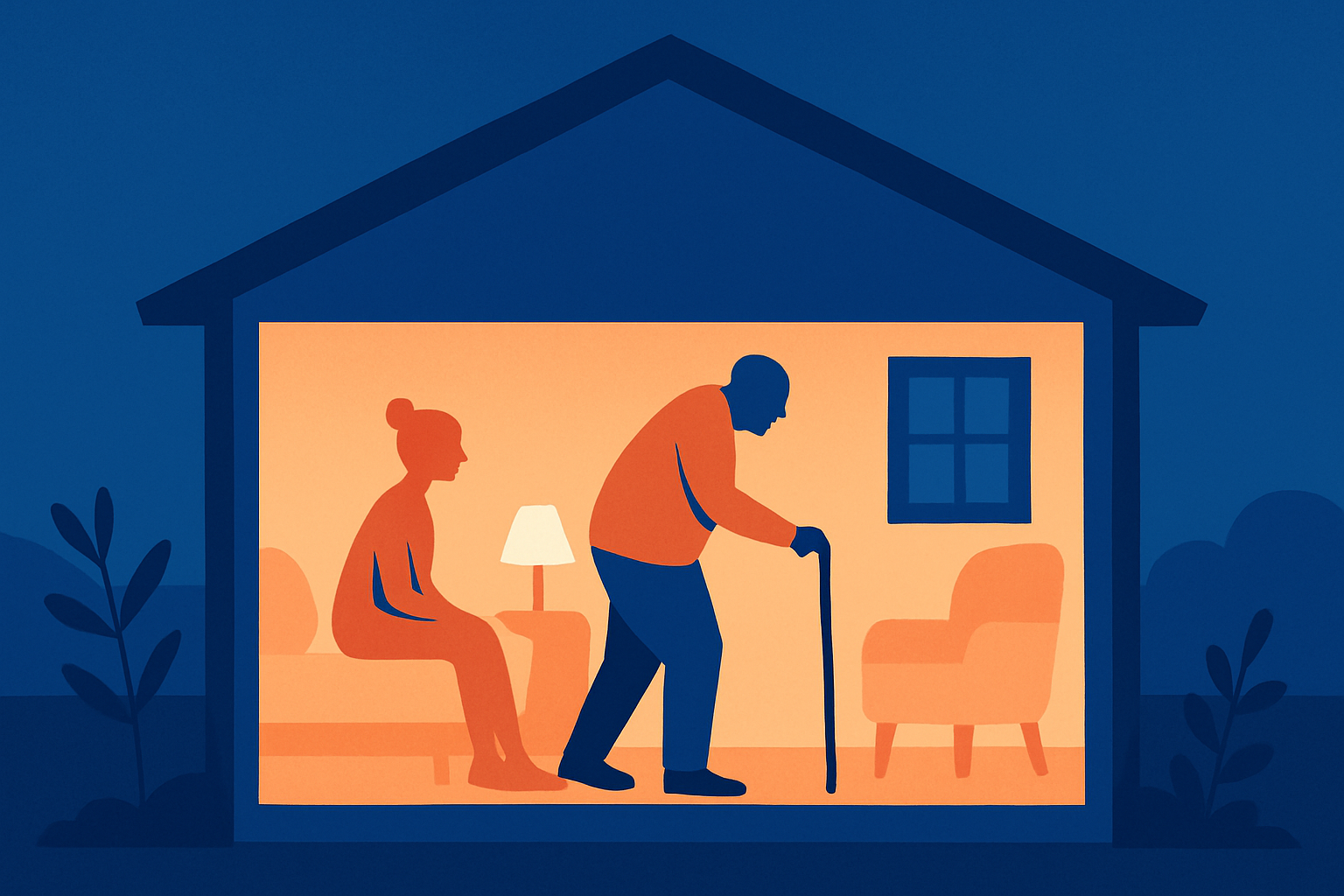
Aging in place is the right call for many older adults. Until needs change, and the house doesn’t. The hardest part of the housing decision is rarely the move — it is naming the moment when the home that has been a safe choice for ten years has quietly become a risky one, before a fall or a hospital discharge names it for you. The honest signals are not subtle once you know what you are looking at. Many families notice them for a year before they say them out loud.
This is the field guide to the five signals. None of them on its own forces a move. Two or three of them together is the conversation most families look back on and say, 'we knew.' Reading them early — before a crisis decides the timeline — is how families move on their own terms.
Signal one: the home no longer matches the body
A two-story house with the only full bath upstairs. A long unlit driveway in a region with real winters. A kitchen that requires reaching overhead for daily items. A bedroom on the second floor for an older adult whose knees are no longer a match for the stairs.
When the cost of modifying the home for a year of safety would exceed a year of senior-community rent, the math has already tipped — even if the family has not run it. The cornerstone guide includes the home-modification audit; if the audit produces a list more than a year long, the next read is the cost worksheet, not a contractor.
Signal two: the social map has thinned
The closest friends have moved, or died, or stopped driving at night. The church changed pastors. The bridge group folded. The reason to stay in a particular neighborhood was rarely the house — it was the people in walking distance. When the people leave, the house gets quieter, and the older adult often becomes lonelier than the family realizes. Loneliness is now a recognized clinical risk factor for older adults; the U.S. Surgeon General's 2023 advisory on social connection makes the case in plain language.
A senior community is not a cure for grief, and it is not a replacement for old friendships. It is, however, a place where the new friendships are formed because the dining room and the activity calendar deliver it. Many older adults arrive at independent living describing it as their best decision of the decade. Almost none of them say that on the day they sign the contract.
Signal three: maintenance has shifted from hobby to burden
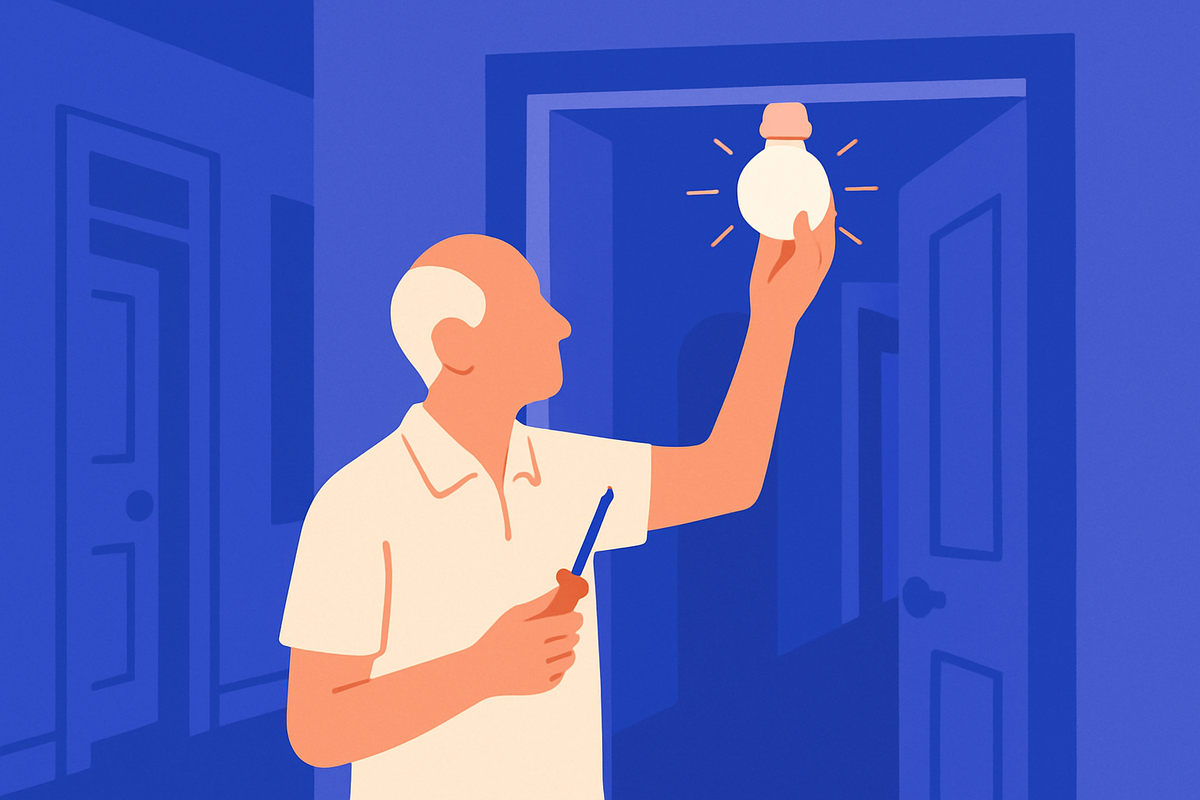
The lawn that took an hour in 2010 takes a Saturday in 2026. The gutters have not been cleaned in three years. The water heater fails and no one in the family knows the plumber's number. The 'projects I want to get to this summer' list has not changed since 2019. None of these are catastrophes. Together, they describe a home that is consuming energy the older adult living there no longer has — and the cost is paid in the small things the older adult would otherwise be doing.
Signal four: caregiver burnout is no longer hypothetical
A spouse or an adult child is providing daily care and has not had a real day off in months. The phone calls home are tighter. Doctor visits are the only family outings. A pattern shows up in many families: the caregiver is running on no sleep, and their mental and physical health start taking the toll. Moving into a community where meals, housekeeping, and some level of care are included is often less expensive than the in-home private care equivalent — and dramatically less impactful than the loss of the family caregiver.
- The spouse is exhaustedA spouse caregiver in their seventies or eighties has roughly the same physical reserves as the person they are caring for. Their health is the unpriced item in the family spreadsheet.
- The adult child is running on no sleepA long-distance child flying home every six weeks, or a local child sleeping over twice a week, is not sustainable past about eighteen months for most families.
- The relationships have narrowedWhen the only conversation is logistics, the older adult often feels less seen, not more. A senior community changes the conversation by changing the dynamic.
Signal five: a medical event has put the timeline in the open
A hospital discharge, a new diagnosis, the death of a spouse. These are the moments when a calm move is still possible, if the family acts in months rather than days. The crisis-room version of this conversation rarely produces a good move — the older adult is afraid, the family is exhausted, and the only options seem to be 'go home now' or 'pick a place in 48 hours.' The window between the medical event and the more difficult version of this conversation is roughly six to twelve weeks. Families that use that window often arrive at a community they chose; families that miss it often arrive somewhere a discharge planner suggested.
The decision rule: One signal? Watch it. Two signals at once? Open the right-sizing conversation. Three signals? Tour two senior communities this quarter, whether or not you decide to move. The tours are the cheapest information you will buy this year, and they change the conversation at home from abstract to concrete.
If any two of the five signals are visible in your family today, the next read is the right-sizing conversation — the calm version of the moving talk, before a crisis writes a worse one. The cost side of the question is covered in the cost of aging in place vs. assisted living worksheet. The full housing-decision walkthrough sits at the stay-or-move decision guide, and the broader pillar lives at the Aging in Place & Moving hub.
Sources
Written by Cyndie Taylor, NASMM. More from Cyndie at taylormademoves.com.
Run a 3-minute home safety audit
Walk through your parent's home one room at a time — kitchen, bathroom, bedroom, stairs — and Aging Sidekick flags the fall-prevention changes that matter most. Free, no signup needed for the audit itself.
Start the safety auditSee the full Aging Sidekick plan →