
If you're caring for an aging family member, it can feel like you’re thinking about their needs from the moment you wake up until you go to sleep.
Caring for an aging parent can require managing medications, coordinating appointments, fielding calls from doctors, and making care decisions — often before you've had your first cup of coffee. It's physically tiring, yes. But in addition to the time and energy spent on providing care, it’s also the mental load that becomes overwhelming. The constant thinking, tracking, and worrying create stress and burnout.
According to the 2025 Caregiving in the U.S. report from AARP and the National Alliance for Caregiving, 63 million Americans — nearly 1 in 4 adults — are now family caregivers, a 45% increase since 2015. The average caregiver spends 22.8 hours a week on care, and nearly 30% spend more than 30 hours weekly. Most of that time is invisible: the mental tracking, the anticipating, the problem-solving.
Here's what a typical day actually looks like — and five practical ways to carry less of it in your head.
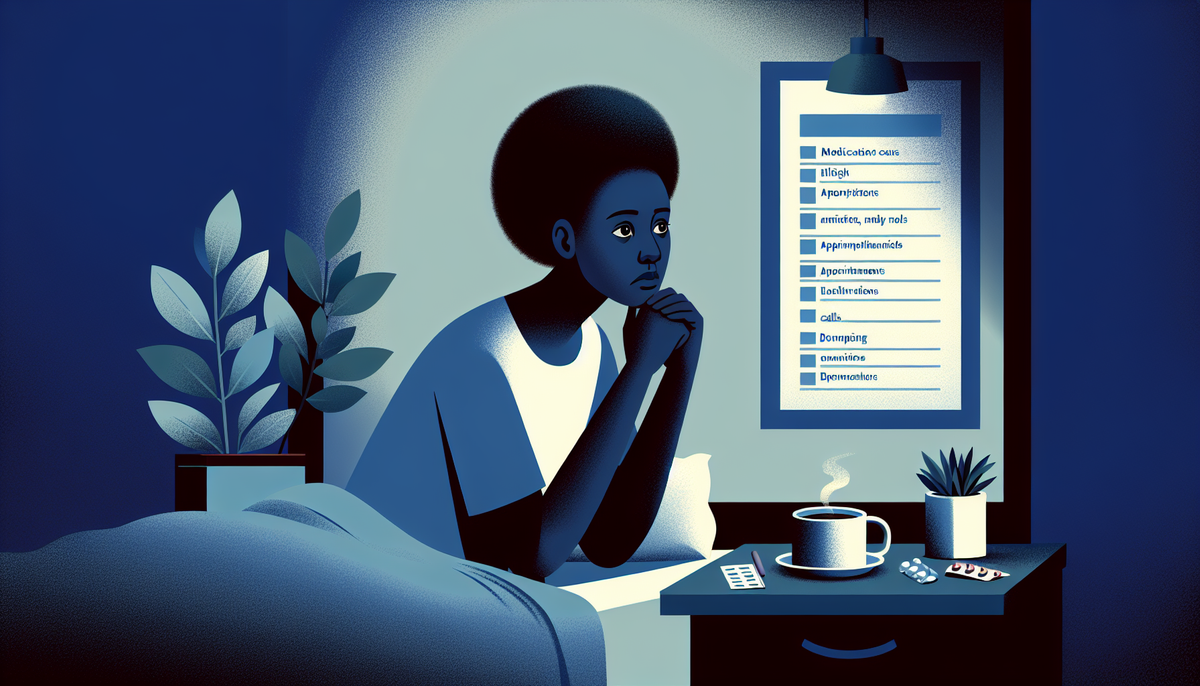
What a Typical Caregiver Day Actually Looks Like
Morning: Before You're Ready
Most caregiver mornings don't ease in gently. Within minutes of waking, you're checking: Did they sleep okay? Did they take their medication? What's on the calendar today?
If you live with your aging family member, or stop by before work, the morning might include making breakfast, laying out medications, helping with dressing, and confirming any appointments. If you manage care from a distance, it might mean a phone call to check in and a round of texts to siblings or home care aides.
Either way, the mental load is already running. And for the 64% of family caregivers who also hold jobs, all of this happens before the workday even starts. source: AARP & National Alliance for Caregiving, 2025

Midday: The Balancing Act
By midday, caregiving rarely stays in its lane. A prescription needs refilling. The doctor's office calls back. A family member has questions. You're managing care from a conference call or a lunch break, switching contexts constantly.
This is where the "cognitive load" of caregiving takes its toll. It's not any one task — it's the accumulation of tasks you're holding in your head simultaneously, with no clear system to offload them.
Afternoon: The Unexpected Moments
Caregiving doesn't follow a schedule. An afternoon can shift fast: a fall, a behavioral change, a medication confusion, a call from a home health aide. Suddenly you're in problem-solving mode, asking yourself, Is this normal? Should I call the doctor? Do I need to go over there?
These unplanned moments are among the hardest — not because they're insurmountable, but because you're often navigating them without clear information, without backup, and in the middle of everything else.
Evening: When It Doesn't Wind Down
Evenings should be recovery time. For many caregivers, they're another shift: dinner, evening medications, safety checks, logistics for tomorrow. And after all that, the mind keeps going.
Did I handle that right today? What do I need to do tomorrow? Did I miss something?
Half of all family caregivers report difficulty sleeping at least once a week. (source: A Place for Mom, 2025), and it's not hard to understand why. The work doesn't end when you sit down. It just moves inside your head.
The Part That Wears You Down (And Why It's Not What You Think)
When caregivers describe burnout, they often point to the emotional and mental weight before they mention the physical tasks. A third of family caregivers say their mental health has worsened since taking on caregiving responsibilities, and 64% report high emotional stress. (source: AARP & National Alliance for Caregiving, 2025)
That's not a sign of weakness or inability. It's what happens when one person holds too much information, makes too many decisions alone, and has no system to catch what they're carrying.
Trying to manage everything on your own leads to burnout, higher stress levels, and declining health.
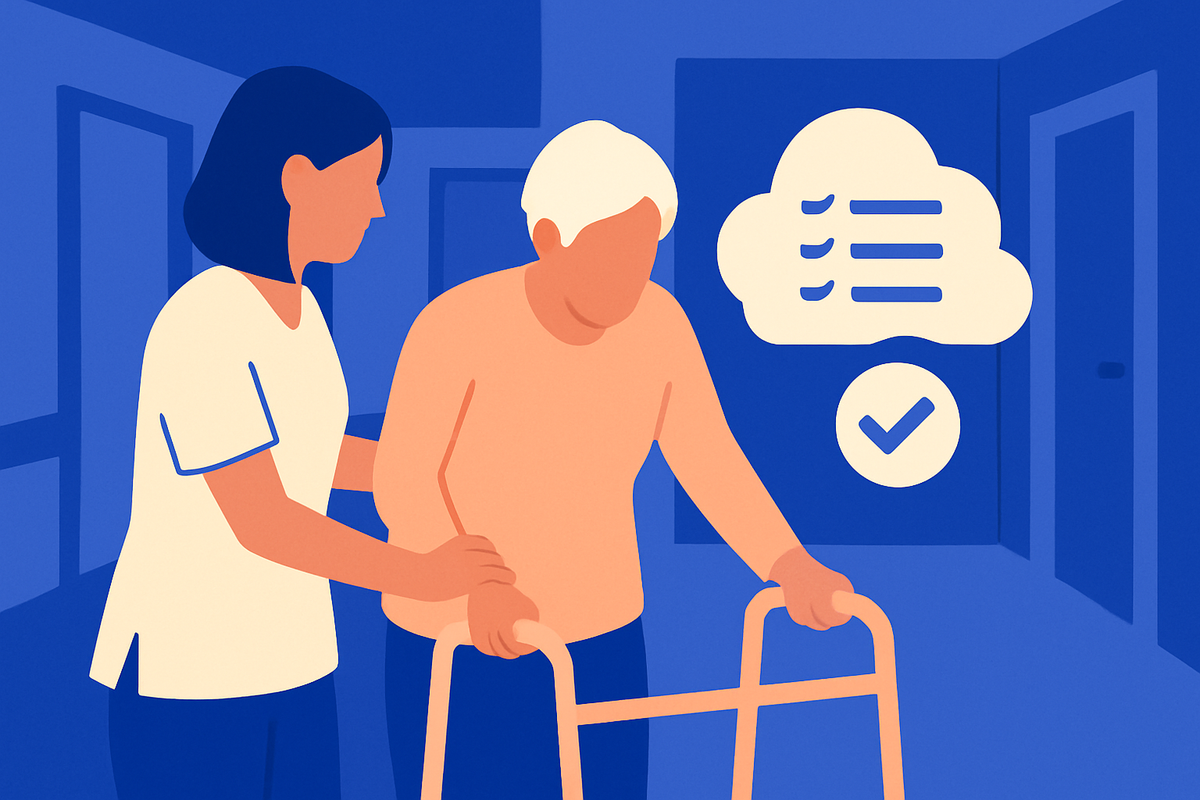
5 Practical Ways to Reduce the Daily Mental Load of Caregiving
1. Get Your Parent's Information Out of Your Head and Into One Place
Medications, dosages, doctors, insurance, allergies, emergency contacts, legal documents — don’t rely on storing all this information in your memory.
Start with a simple document or digital tool where everything lives. The format matters less than the act of getting it out of your head. When information is written down and accessible, you stop spending mental energy maintaining it.
2. Create a Simple Daily Structure (Not a Perfect Schedule)
You don't need a minute-by-minute plan. You need three things at the start of each day:
- What has to happen today: care needs, appointments, filling medications, calls to the attorney or bank
- What can wait
- What you're most worried about
That's it. A daily structure this simple reduces the decision fatigue that builds up when everything feels equally urgent.
3. Have a Trusted Place to Go When You Don't Know What to Do Next
The hardest moments in caregiving aren't the tasks — they're the questions. Is this symptom serious? Should I push for a different medication? What does this diagnosis mean for what comes next?
Having a go-to resource — whether that's a care navigator, a trusted website, or a tool that can guide you — reduces the spiral of searching and second-guessing when you need answers quickly.
4. Make It Easier for Others to Step In
One of the biggest barriers to getting help is that everything is stored in your head. When someone offers to help, there's nothing to hand off. You end up explaining everything from scratch, which sometimes takes more energy than doing it yourself.
When your parent's care information is organized, delegation becomes possible. A family member can cover a week. A home care aide can show up prepared. You can actually take a break.
5. Give Yourself Permission to Have Hard Days
This one doesn't come with a checklist. There will be days when you forget something, when you feel overwhelmed, when the care doesn't go as planned. That's not failure. It's caregiving.
The caregivers who sustain themselves over time — and many are in this for 3-5 years or longer; 25% have been caregiving for more than five years (source: A Place for Mom, 2025) — are the ones who build systems, ask for support, and stop expecting themselves to operate perfectly under impossible conditions.
Frequently Asked Questions About Caregiver Daily Life
How do family caregivers manage daily responsibilities?
Most effective caregivers use some form of external system — a daily checklist, a shared care document, or a digital tool — to reduce the mental load of tracking medications, appointments, and tasks. Without a system, everything gets stored mentally, which leads to decision fatigue and missed details. The specific system matters less than having one.
Why is caring for an aging parent so exhausting?
The physical tasks are tiring, and the cognitive and emotional load amplify the drain on your energy. Family caregivers are making frequent decisions, often without training or clear information, while also managing their own jobs, relationships, and health. Research consistently shows that the mental load of caregiving — the constant monitoring, anticipating, and worrying — is a primary driver of caregiver burnout, not the physical tasks alone.
What are the signs that caregiver stress is becoming burnout?
Common signs include persistent sleep problems, difficulty concentrating on other areas of life, resentment or irritability that feels out of proportion, neglecting your own health appointments, and a sense that you're always behind no matter how much you do. If several of these are present, it's worth taking them seriously — burnout is cumulative, and harder to recover from the longer it goes unaddressed.
What actually helps reduce caregiver stress on a daily basis?
The interventions with the most evidence behind them are practical ones: having an organized system for care information, distributing tasks across family members or paid helpers, getting consistent sleep even when it's difficult, and having a resource to turn to for guidance when you don't know what to do next. Emotional support helps too, but it works better alongside structural changes than in place of them.
How long do most family caregivers provide care?
According to AARP and the National Alliance for Caregiving's 2025 report, 30% of family caregivers have been in that role for five or more years, and 75% have been caregiving for at least a year. Caregiving is rarely a short-term situation, which is why building sustainable systems matters more than pushing through.
A Final Word
A day in the life of a family caregiver is genuinely full — full of tasks, decisions, and care. What makes it feel unmanageable isn't just the volume of work. It's the absence of structure to hold it.
You don't need to do less. You need a better way to carry what you're already doing.
You Don't Have to Hold All of This in Your Head
Aging Sidekick was built for exactly this: one place to organize your family member's care information, plan your days, track what matters, and find answers when you're not sure what to do next. Less mental load. More confidence in the care you're already providing.
See How Aging Sidekick Works →
Sources:
- AARP and National Alliance for Caregiving. Caregiving in the U.S. 2025. Washington, DC: AARP. July 2025.
- Caregiver Action Network. Data & Insights on the Caregiver Experience in the U.S. 2026.
Caregiver burnout self-check (3 min)
A short, evidence-based quiz that surfaces the burnout signals professionals look for — and points you to one realistic next step. No signup; just an honest mirror.
Take the self-checkSee how Aging Sidekick supports caregivers →