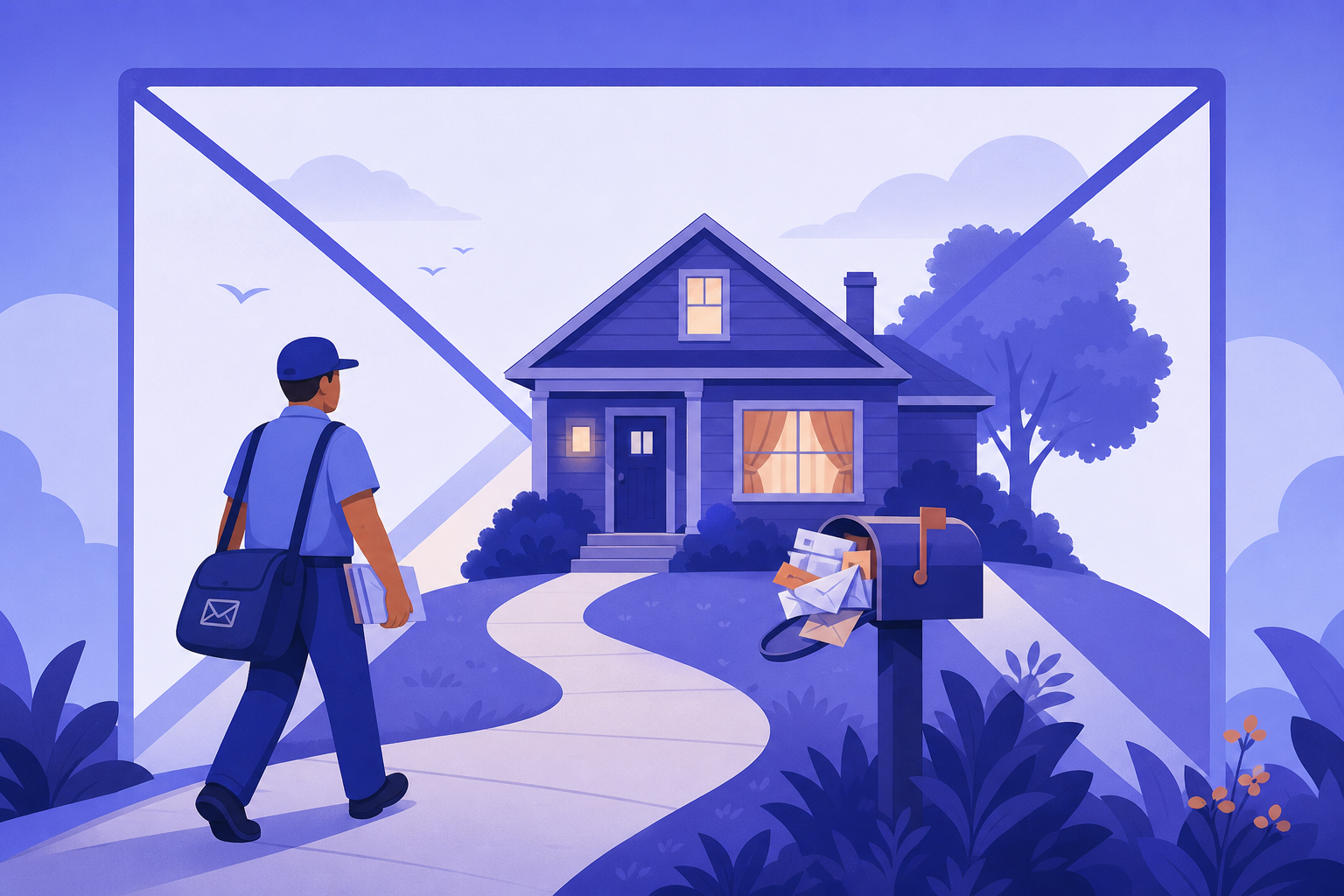
A free, overlooked program turns everyday postal routes into a community watch for older adults living alone.
If you're caring for an aging parent or loved one who lives independently, you know the fear that lives in the back of your mind. Did they take their medication? Did they fall? Are they okay? You can't be there every hour. And even if you live close by, there are entire stretches of the day—sometimes the week—when no one is checking in.
That weight doesn't go away ; it just sits there, quietly.
Here's something that might help: a program that's been quietly operating since 1982, run through the U.S. Postal Service and the National Association of Letter Carriers (NALC). It's called Carrier Alert, and it turns your loved one's mail carrier into an extra set of eyes.
How Carrier Alert Helps
Carrier Alert is a cooperative community service program designed to monitor the well-being of elderly and disabled adults. As one of the few—and sometimes only—points of human contact for homebound individuals, letter carriers are trained to notice signs that something might be wrong.
When a carrier spots something unusual about a registered patron—mail piling up, lights burning at odd hours, drawn curtains that don't open, a pet crying inside—they report it to a postal supervisor, who contacts the sponsoring local agency. That agency then checks on the person and, if needed, contacts family members, police, or emergency services.
It's simple. It costs nothing. And it works because letter carriers already do this route, every day. They know the patterns. They notice when something's off.
Why This Matters More Than People Realize
The numbers around older adult isolation are hard to sit with. The AARP Public Policy Institute has found that social isolation is linked to higher rates of cognitive decline, depression, and even early death. And for many older adults living alone, the mail carrier may genuinely be the only person who passes by their home on a consistent, daily basis.
That daily consistency is exactly what makes Carrier Alert different from a well-meaning neighbor or a periodic check-in call. Delivering mail to the same residences day after day, letter carriers become familiar with customers' habits—and that familiarity is what lets them notice when something changes.
A missed newspaper might be nothing. But a mail carrier who knows that your mom always retrieves her mail by 10am—and it's now 3pm and it's still there—that's someone who can act on that knowledge.
The Bigger Idea: Building a Community Around Your Loved One
One program can't do everything. But Carrier Alert points to something worth thinking about more intentionally: the people who are already in your loved one's orbit, every single day, are potential members of their safety network.
The mail carrier. The neighbor across the street. The person at the pharmacy counter who knows their name. The home health aide who comes twice a week. While these people may not be caregivers in the formal sense— together, they form something real.
When you deliberately build those connections, you give yourself more eyes, more opportunities to know if something's wrong, and more chances to catch a problem before it becomes a crisis. Carrier Alert is one formal way to do that. It also opens a door to thinking about who else is already showing up—and whether they know to flag something if it seems off.
How to Get Started
To find out if Carrier Alert is operating in your loved one's community, contact the local NALC branch office or post office. Availability varies by region—where the program is in use, it earns consistent praise, but because participation is voluntary and depends on local agencies, it is well established in some areas and little known in others.
If it's not active in your area, that's worth knowing too—because local agencies, including Area Agencies on Aging, are sometimes the ones who can help get a program like this off the ground.
Start by visiting nalc.org/community-service/carrier-alert to learn more and find local contact information.
Want help finding other community-based resources for your aging loved one?
Aging Sidekick is here to help you navigate the options—from formal programs to everyday strategies that make caregiving a little more manageable. Browse our resource library or reach out directly.
[Explore Resources] → /resources
Sources: National Association of Letter Carriers (NALC), nalc.org/community-service/carrier-alert; AARP Public Policy Institute, research on social isolation and aging.
SEO ELEMENTS