You’re 1,000 miles away. Be present where it counts.
Aging Sidekick lets you build a full profile of your parent's care from another time zone — voice intake, document upload, and a printable Daily Care Plan you can FedEx to the local relative. Each of you signs up, each of you sees the same up-to-date plan.
Aging Sidekick complements, not replaces, your care team. In an emergency, call your local emergency number.
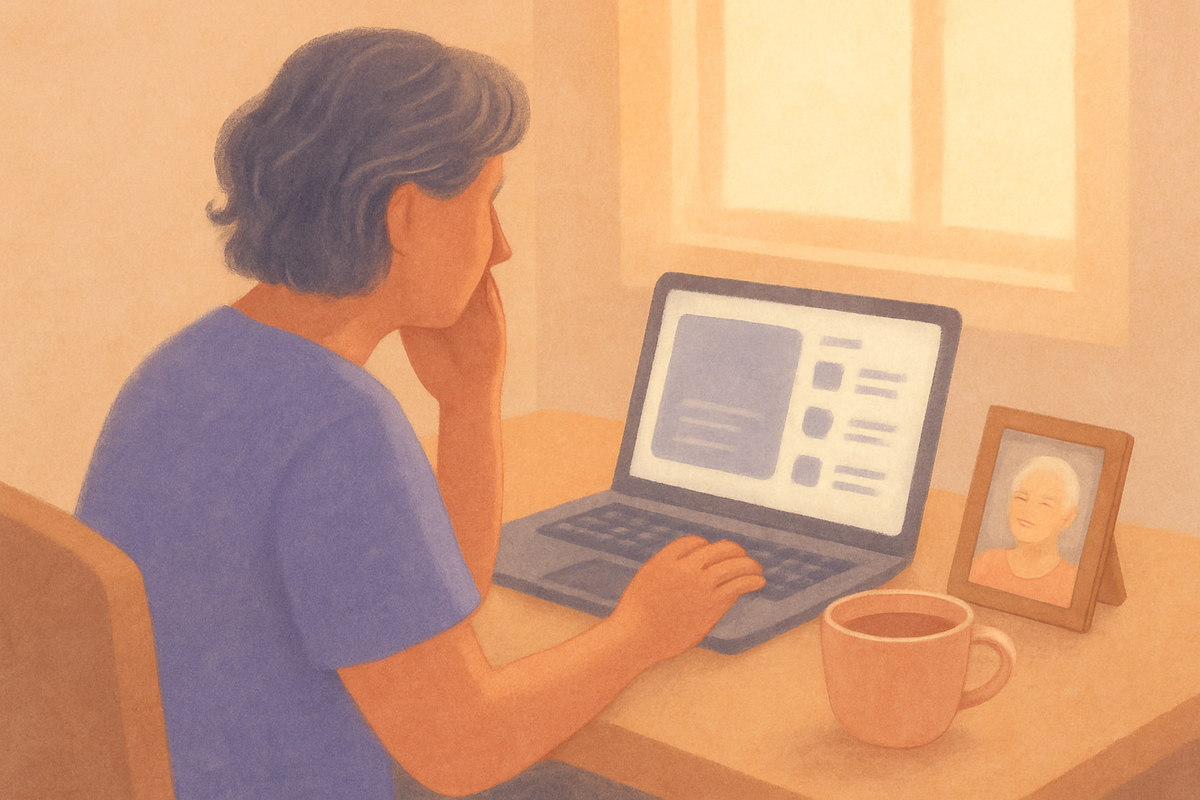
The call from the neighbor.
It is the call every long-distance caregiver braces for — the neighbor, the building manager, the hospital social worker on the other end of the line. The flight is hours away. The local relative is at work. You are trying to take notes on the back of a receipt. The first hour is the hour the rest of the week is built on.

Eyes on the ground from another time zone.
Aging Sidekick is a web app with browser-mic voice intake — so you can do everything from your laptop, in your time zone, while the local relative is asleep. Talk it through, upload the discharge summary, and print a Daily Care Plan you can hand the local sibling or FedEx to the neighbor.
- Voice intake from anywhere — 15 minutes, browser mic, no app to install
- Document upload from anywhere — discharge summary, medication list, insurance card
- Printable Daily Care Plan — hand it to the local sibling or FedEx it to the neighbor
Long-distance costs ~$12,000/yr. Nearby costs ~$7,000.
AARP's 2021 Family Caregivers Cost Survey put the average family-caregiver out-of-pocket at $7,242 a year. Long-distance caregivers spend closer to $12,000 — flights, last-minute hotel stays, paid help they can't supervise, duplicate equipment shipped to the wrong address. A shared, up-to-date care plan is the single biggest thing that pulls those numbers down.
What it looks like inside
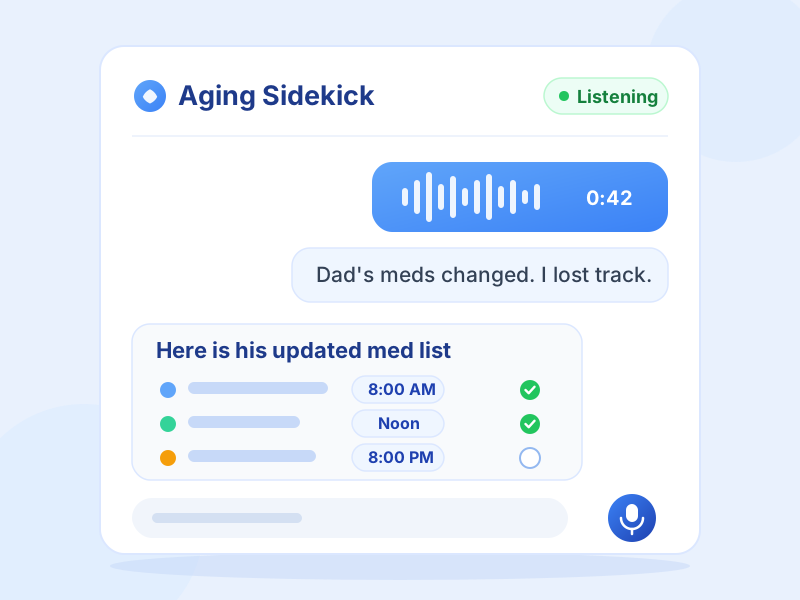
Voice intake from your time zone
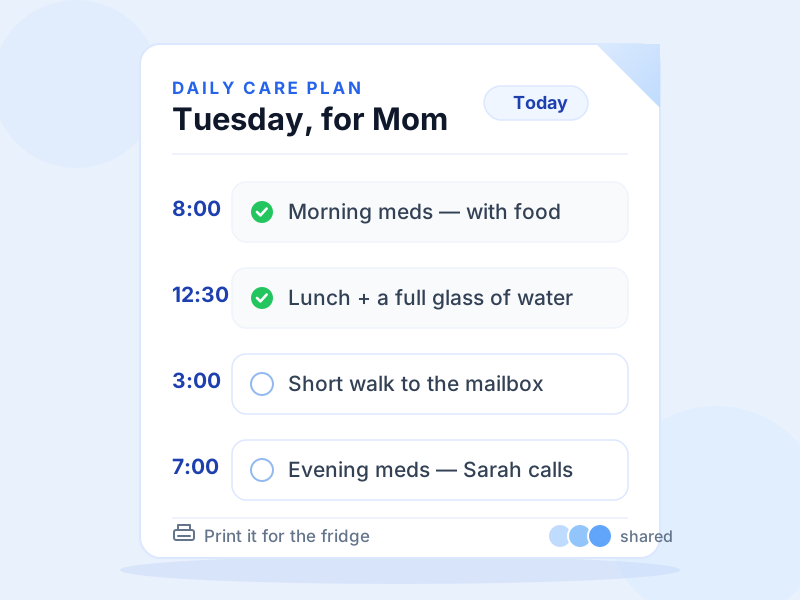
Printable Daily Care Plan
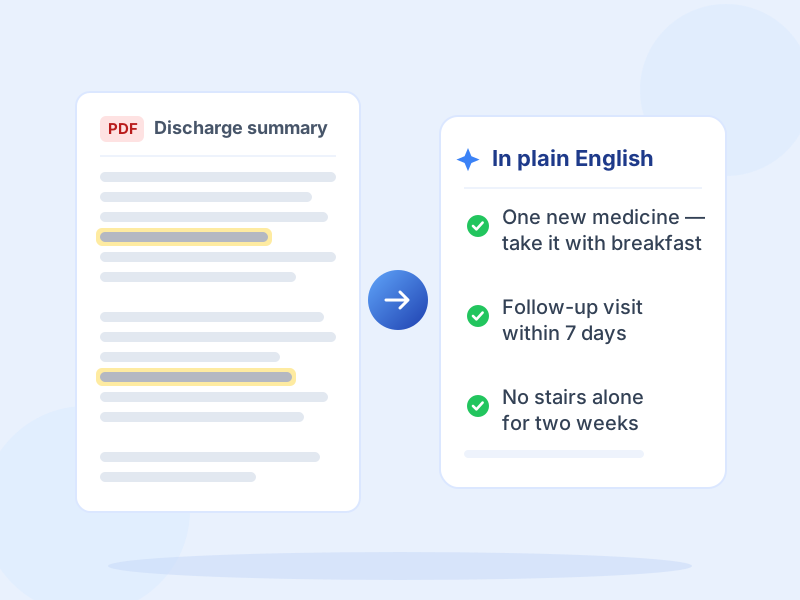
Plain-English discharge summary
What long-distance caregivers tell us
I am living in an almost constant state of anxiety and guilt. … I really am doing my best, but I can't help but think that my best is not good enough.
I live about 1000 miles away, but I've spent about 3-4 weeks there since last Fall, traveling back and forth … I have to speak to insurance, doctors, PT, etc., because he never asks questions, never remembers what the docs say, has completely let his home go, and barely takes care of himself. … I feel awful she [my wife] has to do school drop off and pick-up along with afterschool stuff, which I normally do a lot of. … I feel so guilty about it, but there's not much other choice.
Built with senior care experience and grounded in trusted public sources
Encrypted in transit and at rest, access-controlled, and never sold. We are not a HIPAA-covered entity — see our Consumer Health Data Privacy Notice.
The call from the neighbor: 5 things to do in the first hour
A printable, plain-language checklist of the five things to do in the first hour after the neighbor calls — who to call first, what to ask the hospital, what to write down, what to FedEx, and what can wait until morning.
Talking to your sibling about caregiving
The conversation between the long-distance caregiver and the local sibling is the one most families put off the longest. Who drives to the appointments. Who pays the bills out of the joint account. Who gets the call at 2 a.m. and who gets the call at 2 p.m. It rarely sorts itself out without a calm, written agenda.
The agenda below is one we wish we'd had — a one-page, plain-language list of the questions to settle before the next crisis, not during it.
Talking to your sibling about caregiving — printable agenda
A one-page, plain-language agenda for the conversation between the long-distance caregiver and the local sibling — who does what, how decisions get made, what gets paid for and by whom, and how often you'll talk.
What we don't do (yet)
Today, Aging Sidekick is one account per caregiver. You and your local sibling each sign up with your own login, and you each see the up-to-date care plan. It is not a shared workspace — and we are not going to call it one.
A true shared family view — one care circle, role-based access, sibling-friendly notifications — is on our roadmap. Join the waitlist and we will tell you when it is ready.
Long-distance caregivers ask these the most.
Is this a shared family account?
Can my local sibling see what I update?
Do you replace a geriatric care manager?
Can I use Aging Sidekick for emergencies?
Start your loved one's plan free — takes 15 minutes.
Free to start, no card required. Upgrade to Premium for more voice time.