Just diagnosed. Now what?
Aging Sidekick walks you through the first 30 days after a dementia or Alzheimer's diagnosis — legal, medical, daily care, and what to tell the rest of the family.
Aging Sidekick complements, not replaces, your care team. In an emergency, call your local emergency number.
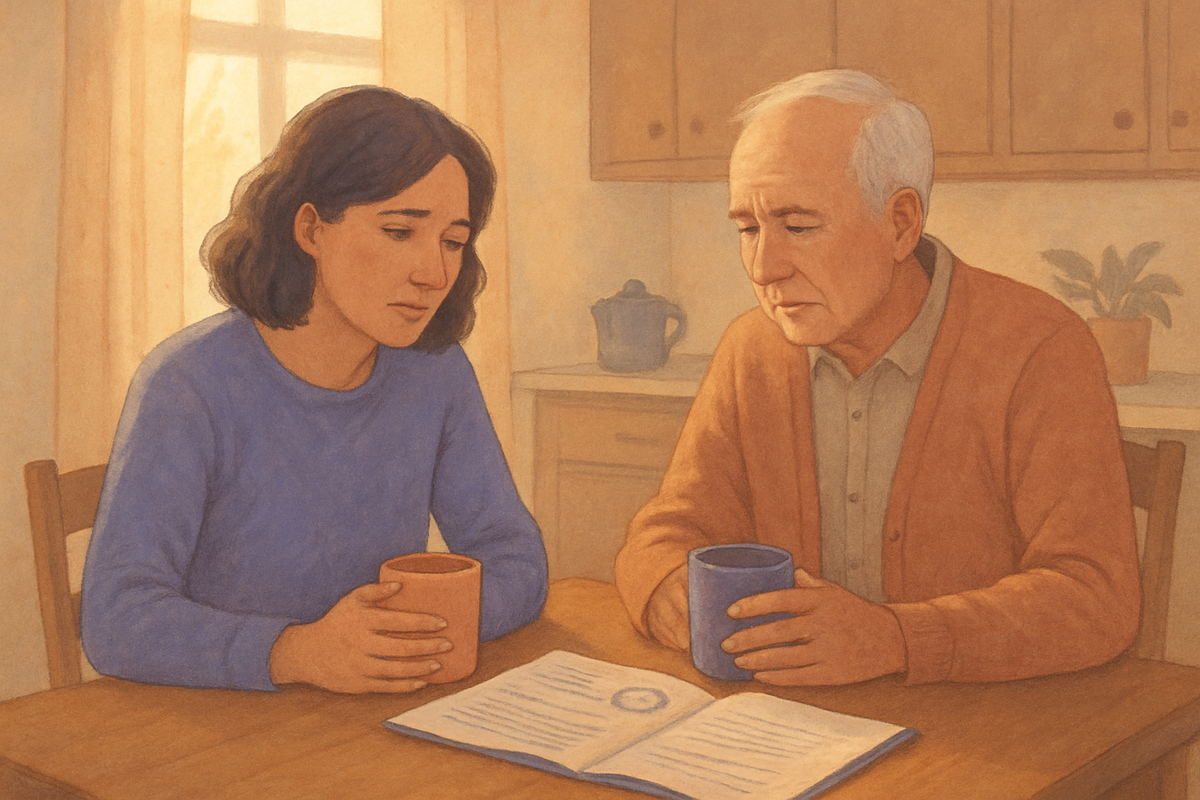
A diagnosis is the start of a plan, not the end of one.
In the first month after a dementia diagnosis, the questions stack up faster than the answers — who has POA, which doctor sees them next, what medications change, what to say at the next family meeting. Aging Sidekick walks you through it, one step at a time.
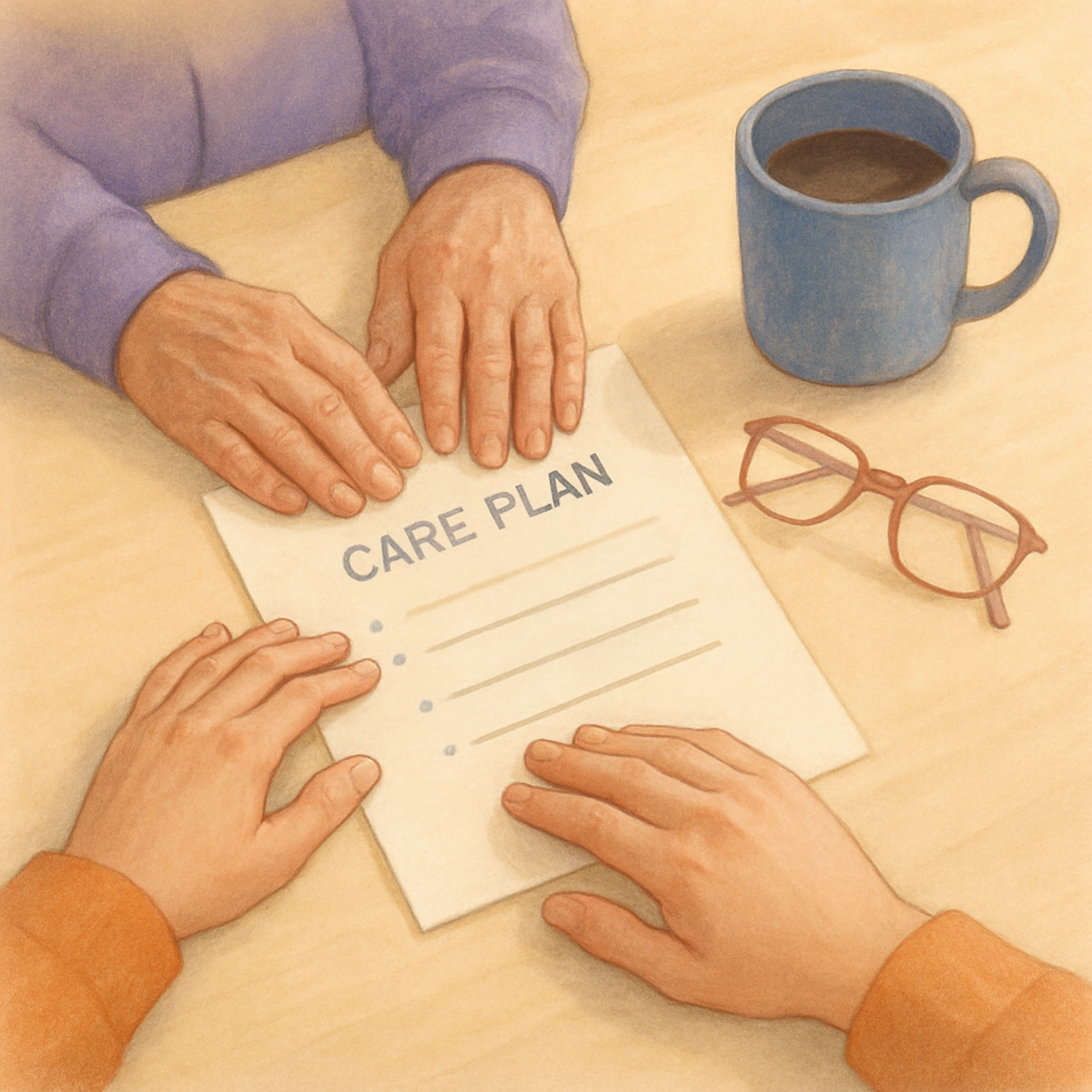
A 15-minute voice intake. Eighteen assessments. Ten Life Plans.
Talk it through once. Aging Sidekick builds a profile, draws on a library of 18 assessment templates — including Legal, Financial, and End-of-Life — and writes ten plain-language Life Plans you can act on.
- Voice intake — 15 minutes — builds the profile while you talk
- 18 assessment templates — including Legal, Financial, and End-of-Life
- 10 Life Plans — including Medication Schedule, Legal Checklist, and End-of-Life Checklist
What it looks like inside
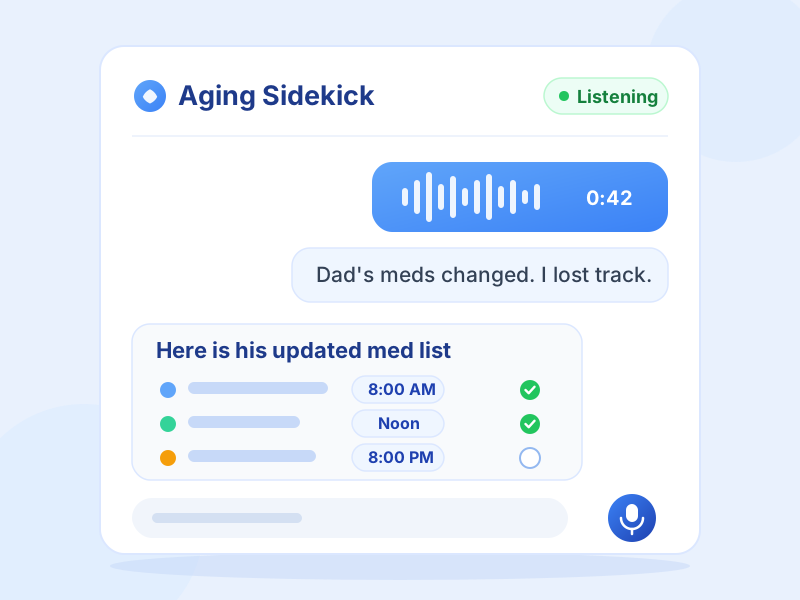
Voice intake — 15 minutes
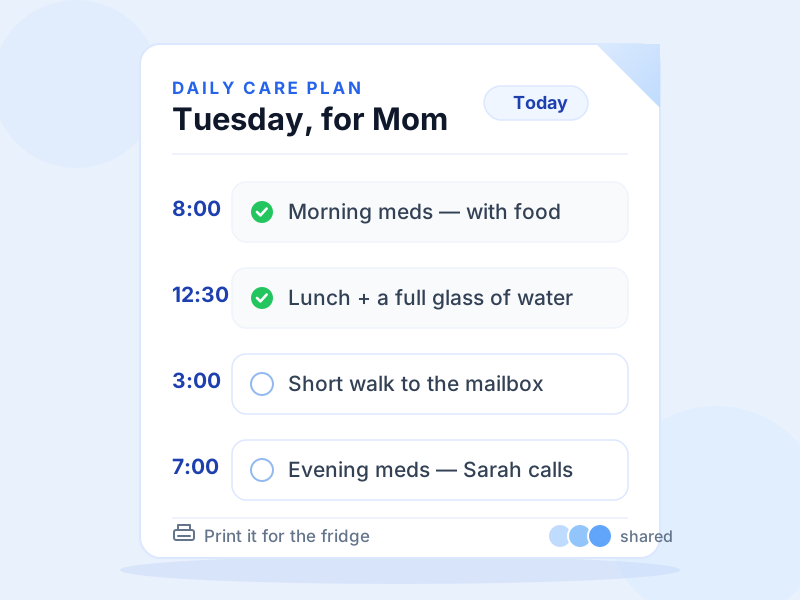
A daily plan that holds the new routine
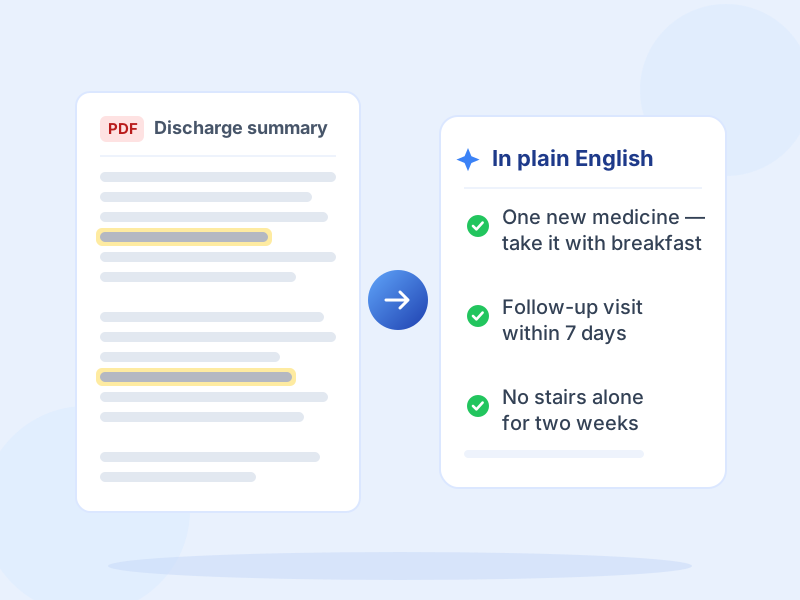
Every document, turned into plain English
What kind of dementia is it?
Dementia is an umbrella term. The plan you write for the next few years often depends on which kind your loved one has, so it helps to ask the doctor for the specific name and to write it down.
Alzheimer's disease is the most common type. Short-term memory tends to slip first, and word-finding becomes harder over time.
Lewy body dementia often comes with vivid dreams, visible movement changes, and good days and bad days that swing more than families expect.
Vascular dementia tends to step down in stages, often after a stroke or a series of small ones. Things can hold steady for a while between steps.
Frontotemporal dementia often shows up first as a personality or judgment change — not memory loss. It can be misread as depression early on.
Sources: Alzheimer's Association · National Institute on Aging · Mayo Clinic · alzheimers.gov.
Why POA matters today, not someday
Power of attorney is a legal document your loved one signs while they still can. It names someone to make financial or health-care decisions if they later cannot. Signing it early — while the diagnosis is fresh but cognition is still intact — keeps the choice in your family's hands, not a court's.
A few practical notes. Most families need both a durable financial POA and a health-care POA (sometimes called a health-care proxy or advance directive). They are usually separate documents. State law varies, and an elder-law attorney can draft both for a fraction of the cost of a contested guardianship later on.
Find a local elder-law attorney through NAELA — National Academy of Elder Law Attorneys.
What caregivers tell us
I went into overdrive. Researching. Calling. Setting up appointments and second opinions. PET scans. Sleep studies. Clinical trial postings. … I made lists and schedules. Hung whiteboards and left reminders all over her house. … And I still lost. It was mind-numbing. Knowing what you don't know. Not knowing what to expect. Standing on a cliff and pretending you don't see the drop.
My mom definitely has had some significant cognitive decline but getting her tested and diagnosed has taken a back burner to my dad's more urgent heart failure and other conditions. It just makes me sad. I miss them so much even though they're still here.
Built with senior care experience and grounded in trusted public sources
Encrypted in transit and at rest, access-controlled, and never sold. We are not a HIPAA-covered entity — see our Consumer Health Data Privacy Notice.
The first 30 days: 12 things to do, in order
A printable, plain-language 12-step checklist for the first month after a dementia diagnosis — the legal, medical, daily-care, and family-conversation steps in the order most caregivers wish they had done them.
Caregivers ask these the most.
Do we really need a POA right away?
How do I know what kind of dementia my parent has?
How do I tell my siblings, my kids, and the rest of the family?
Is this an emergency?
Start your plan free — takes 15 minutes.
Free to start, no card required. Upgrade to Premium for more voice time.