2 a.m. Again. We can help.
Aging Sidekick is built for the moments no one else answers. Read what tends to help when the evenings get hard, then save the calming tips to your parent's profile so they travel with you — onto whatever device you happen to grab at 2 a.m.
Aging Sidekick complements, not replaces, your care team. In an emergency, call your local emergency number.
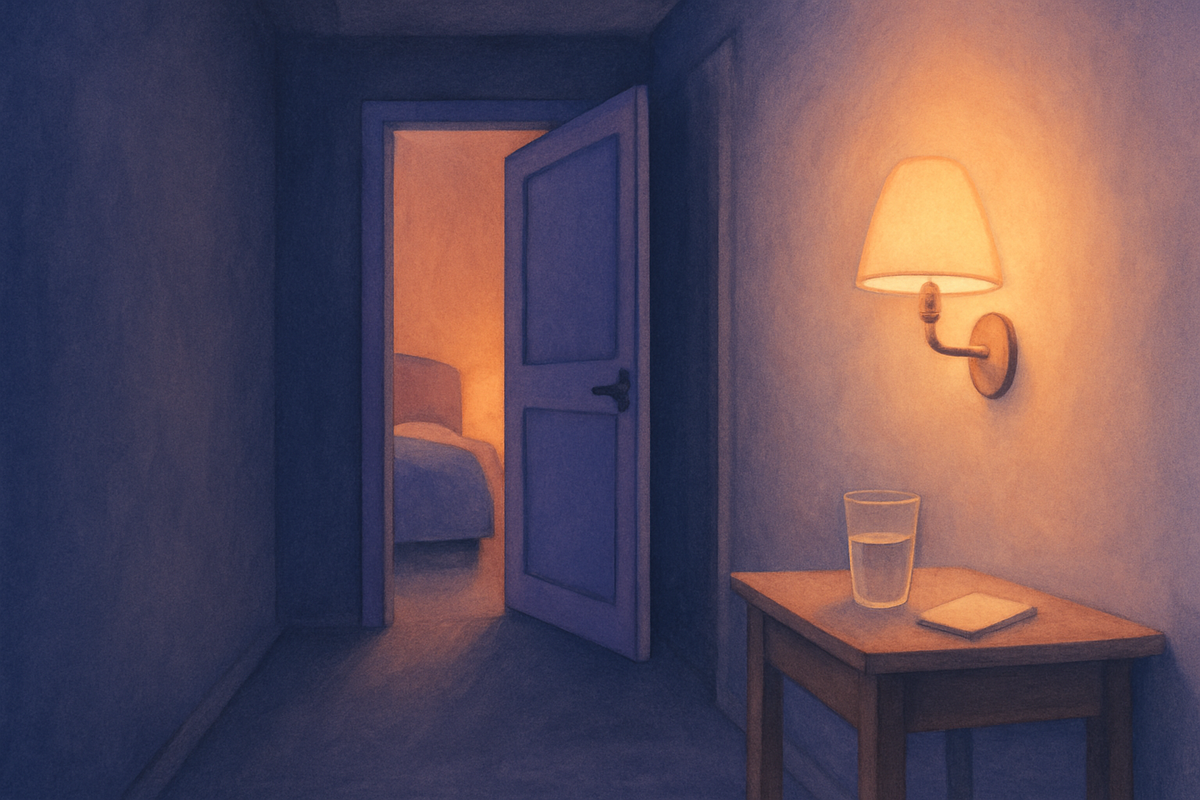
2 a.m. Again.
The TV is on at full volume. Your mother is in the hallway, dressed for the day, asking where her brother is — the brother who has been dead for ten years. You have not slept through the night in four days. You are not failing. This pattern has a name, it has triggers, and there are small things that tend to help.
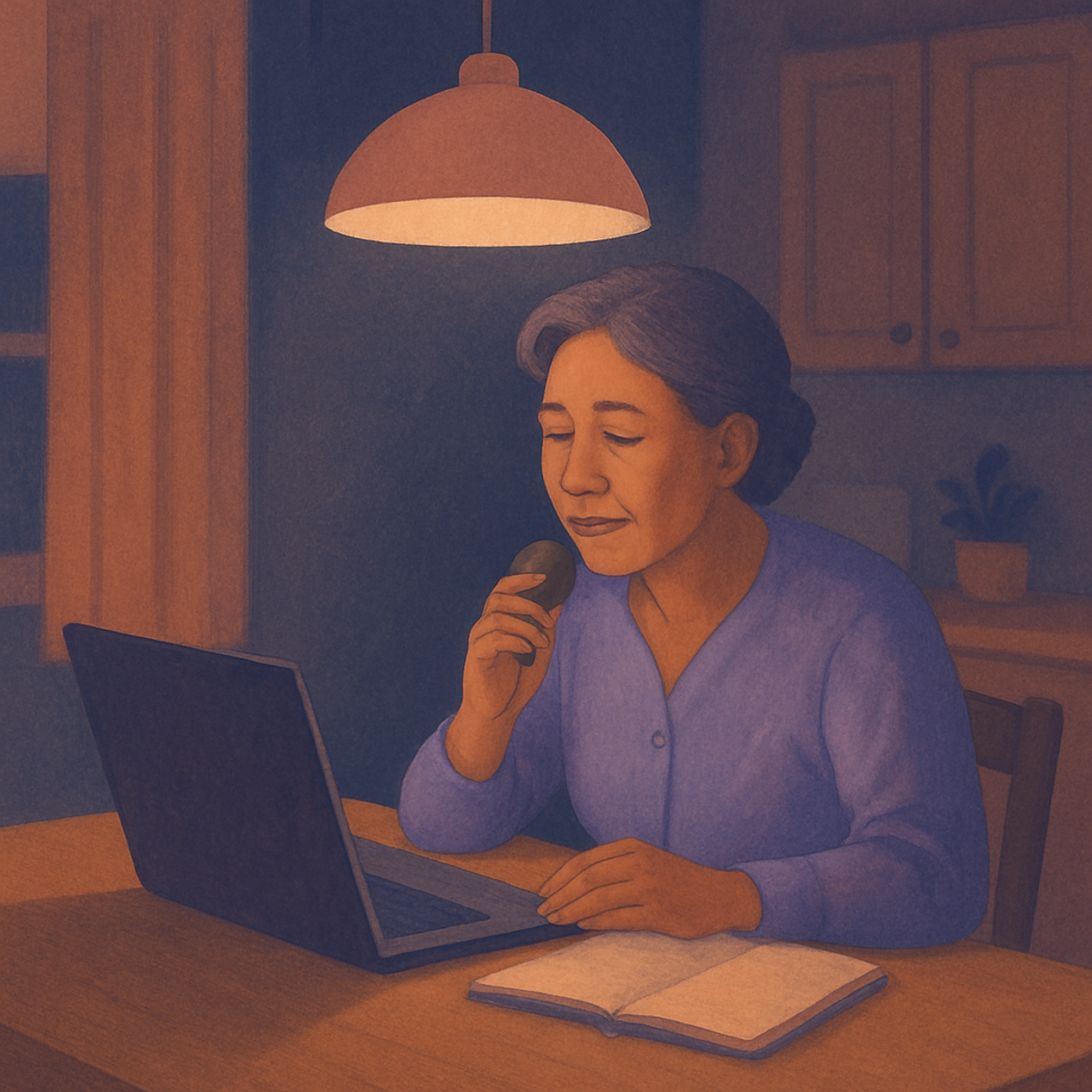
A calmer playbook for the long evenings.
Aging Sidekick is the planning tool you reach for when the doctor's office is closed. Voice intake at 2 a.m. is faster than typing when you are exhausted. The profile holds the calming tips, the medication list, and the notes from the last appointment in one place — so the next time it is 2 a.m. you are not searching for the right tab.
- Browser-mic voice intake — talk it through when typing is too much
- A profile that holds the calming tips alongside the medication list
- Plain-language notes you can bring to the next appointment
What it looks like inside
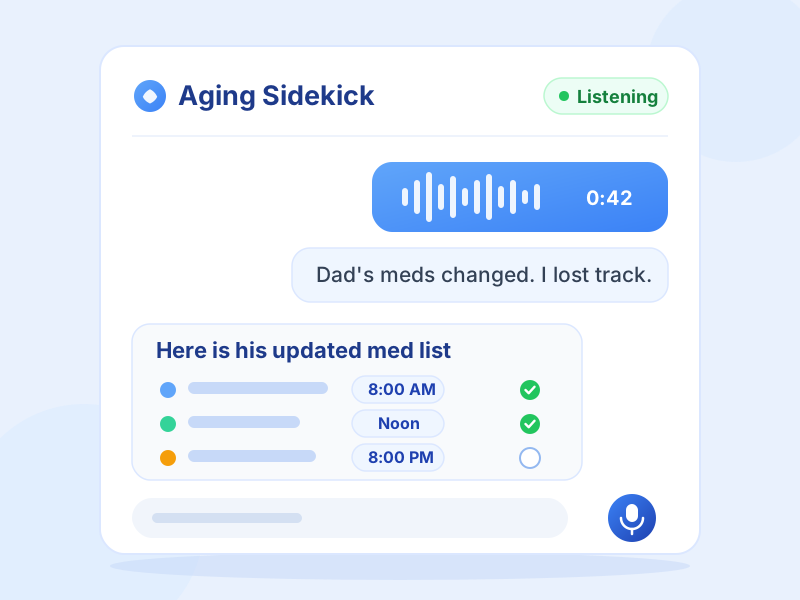
Voice intake when typing is too much
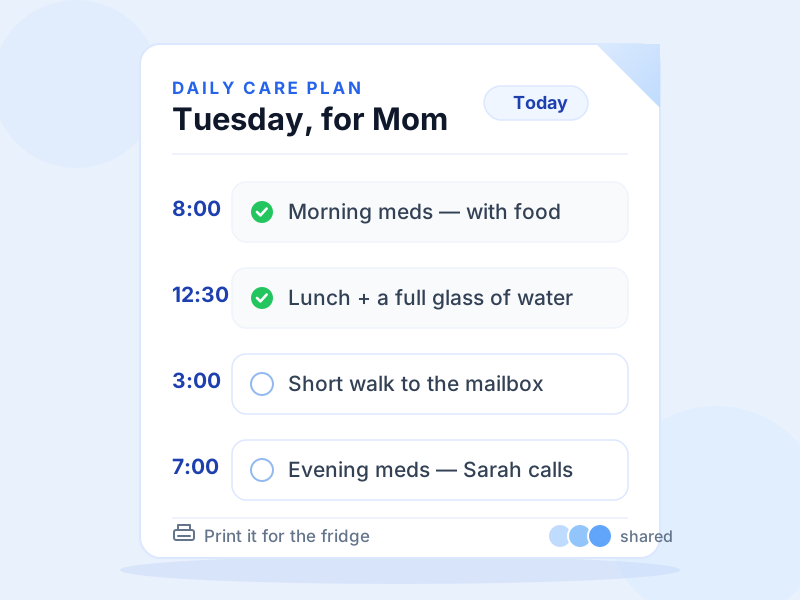
The plan holds the evening routine
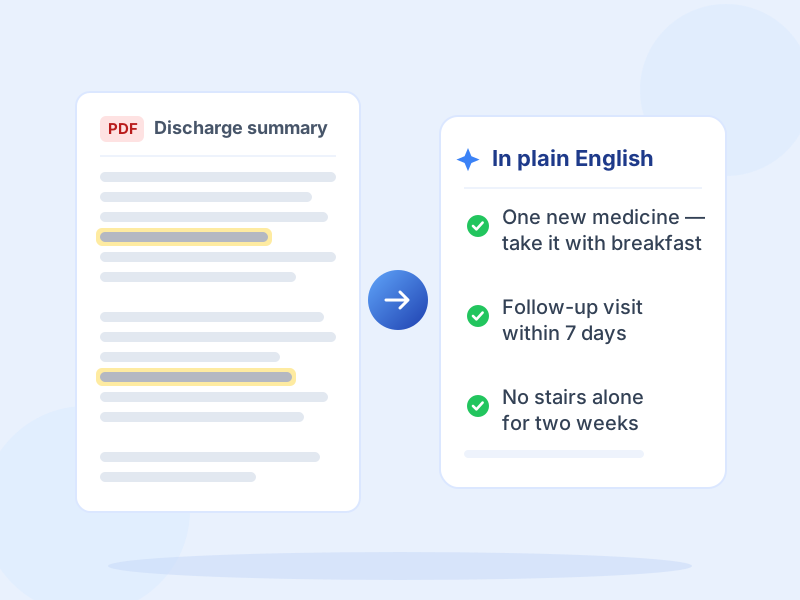
Every doctor's note in plain English
What caregivers tell us about the long evenings
This has happened 3 times in the past 2 weeks, always around 2:00 in the morning. My 95 year old Mom (vascular dementia) turns her TV on and off with the volume at the highest level which of course wakes me up. … She said she thinks she is losing her mind and wanted to know what was wrong. … I heard of sundowning but I thought that happened early in the evening not in the middle of the night.
Built with senior care experience and grounded in trusted public sources
Encrypted in transit and at rest, access-controlled, and never sold. We are not a HIPAA-covered entity — see our Consumer Health Data Privacy Notice.
What sundowning is
Sundowning is the late-day confusion, anxiety, agitation, or restlessness many people with dementia experience as daylight fades and into the night. It is not a diagnosis on its own — it is a pattern of behavior tied to the time of day. Some caregivers describe it as a switch flipping at dusk: the parent who was calm at lunch becomes pacing, calling out, or insisting on going home from the home they have lived in for forty years.
It is common — most caregivers of someone with Alzheimer's or another dementia will see some version of it — and it tends to be worse in the middle stage. It can also show up in the middle of the night, not just at dusk, so the name is a little misleading.
What tends to trigger it
There is no single cause, and the trigger for one person may not be the trigger for another. The patterns the Alzheimer's Association and the National Institute on Aging name most often:
Fatigue — the longer the day, the thinner the reserve. A nap that runs too late in the afternoon can make sundowning worse, not better.
Low light and shadows — as the sun drops, the room gets harder to read. Shadows look like people, the hallway looks unfamiliar, the mirror at the end of the hall becomes a stranger.
Hunger, thirst, and a full bladder — the body's basic discomforts that a person with dementia may not be able to name. Worth a check before anything else.
Pain — a sore hip, a UTI, a tooth that has been hurting for a week. Pain that gets through the day shows up loudest at night.
Overstimulation — a noisy dinner, a long visit, the TV news on in the background. Late in the day, the volume of the world is harder to filter.
Medication timing — some medications are sedating at the wrong end of the day, some are activating. This is a conversation for the pharmacist or doctor, not a thing to change on your own.
What tends to help
None of these are guaranteed, and what works one week may stop working the next. They are the small adjustments caregivers and clinicians come back to most often:
Light. Open the curtains in the morning and keep the lights on inside as the sun starts to drop — do not let the room dim with the sky. A bright lamp in the living room at 4 p.m. is one of the cheapest interventions there is.
Routine. The same wake time, the same meal times, the same wind-down. Predictability lowers the cognitive load on a brain that is already working harder than it used to.
A calmer evening. Quiet music, a folded laundry basket to sort, a familiar photo album. Save the harder conversations and the loud TV for earlier in the day.
Redirection, not correction. If your parent insists on going home from the home they are in, do not argue them out of it — walk with them for a minute, change the subject, offer a cup of tea. The feeling is real even when the facts are not.
A safer environment after dark. A nightlight in the hall and the bathroom, the bedroom door left ajar, the front door locked or alarmed if wandering is a risk. The Alzheimer's Association has a free wandering-response service worth knowing about before you need it.
Write down what happened — what time it started, what was happening before, what helped, what did not. Bring the notes to the next appointment. Patterns are easier to see on paper than in the middle of the night.
Save these tips to your loved one's profile
Sign up free and we will hold these calming tips on the profile for your parent — alongside their medication list, their doctors, and the notes from the last appointment — so the next time it is 2 a.m. you are not searching for the right tab.
Free, no card required. The tips travel with the profile, so they are on whatever device you happen to grab at 2 a.m.
What caregivers ask about sundowning.
Is sundowning medical or behavioral?
When should I call the doctor?
How do I keep my parent safe after dark?
Is this an emergency?
Start your loved one's plan free — takes 15 minutes.
Free to start, no card required. Upgrade to Premium for more voice time.