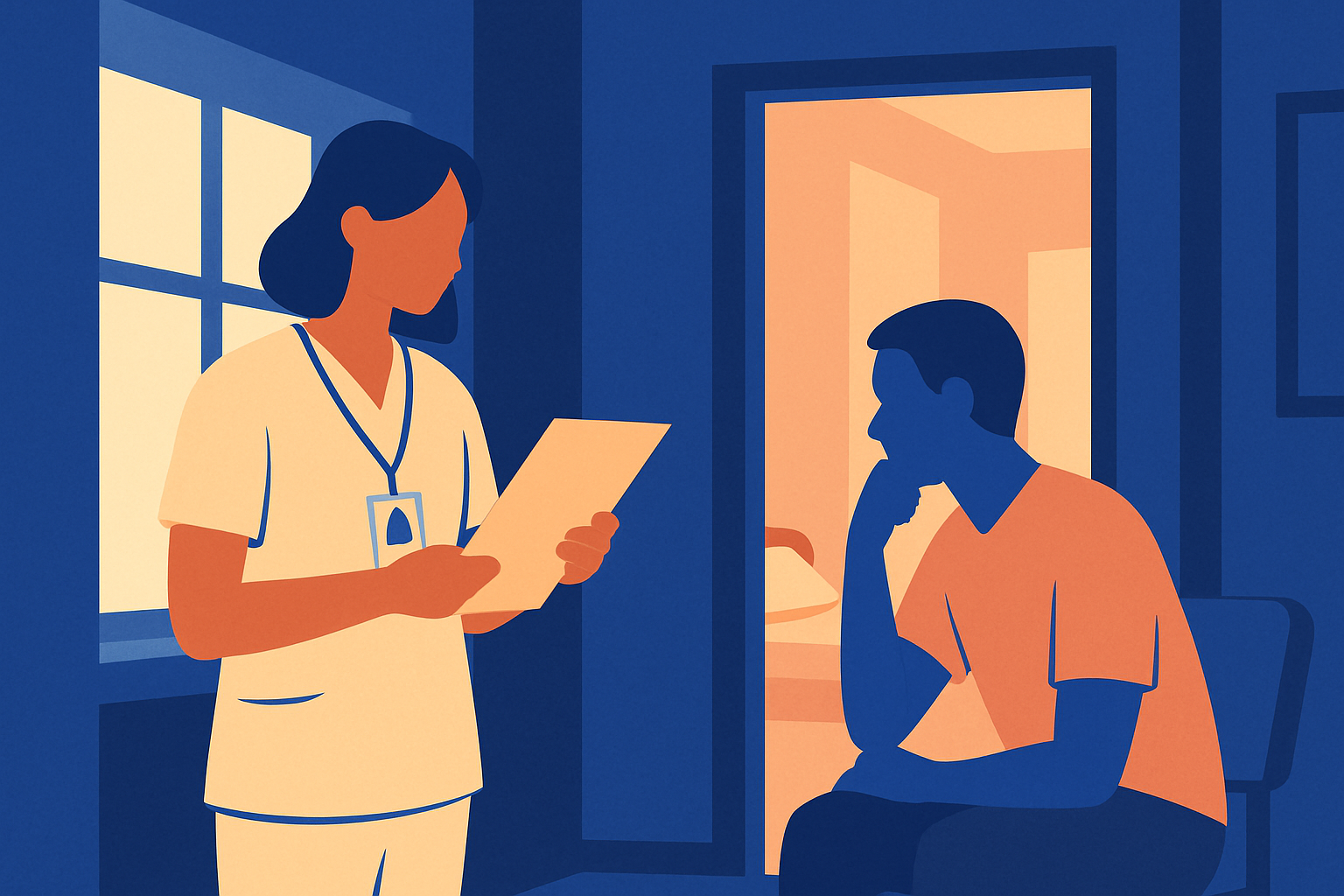
The hospital case manager (sometimes called the discharge planner or the social worker) is a key player in your loved one’s recovery. It’s important to make time to talk with them before your parent leaves the hospital. The conversation lasts twenty minutes and shapes the next two weeks. Having a script to guide the discharge planning conversation makes all the difference.
This is that script. Eight questions, in order, with the rationale behind each. Print it. Read it out loud. The point is to slow the room down enough that the plan, the medication list, the equipment, and the follow-up are all visible to the family before the discharge paperwork gets signed.
TL;DR: Bring a printed list of questions. Ask permission to record. Get the diagnosis in plain English, the medication changes in writing, the next provider appointment booked before you leave, the equipment delivery confirmed, the warning signs specific to the diagnosis, and the after-hours nurse line saved in your phone. End by reading your notes back: 'let me make sure I understood you.'
Before the meeting: three minutes of prep
The case-manager meeting may happen with little notice — sometimes the morning of discharge. The three minutes you have before the meeting prepare you to have the most productive twenty-minute conversation. Open a single note on your phone. Write down: who is at home, what hours, what equipment is already there, and what is missing. Write down the medications your parent was taking before admission. Write down any allergies or prior reactions. That short prep changes the questions you can answer when the case manager asks them back.
If you can, ask whether a partner, sibling, or trusted neighbor can join by phone. Two heads remember a meeting better than one, and the case manager will repeat instructions if a phone is on the table. Most case managers welcome a second listener.
The eight questions, in order
Each question below has been chosen because it surfaces information that is usually only available during this meeting. Once the discharge order is written and the case manager has moved to the next patient, the same information can take days to find.
- What is the diagnosis, in everyday words?Ask for the translation of any medical term you do not recognize. Write it down. Ask again if it is still unclear. The diagnosis is the center point that every other answer hangs from.
- What changed during this stay?New condition, worsening of an old one, a new medication, a new device. Knowing "why we are here" makes the rest of the plan make sense.
- Which medications are new, stopped, or changed?Ask for a printed list with name, dose, timing, and the reason for each. The medication list is the highest-risk page in the discharge packet.
- Who is the follow-up provider, and when?Aim to leave with the first appointment booked on a calendar, not a to-do list. If a specialist is needed, get the name and the phone number.
- What equipment is coming home, and when?Walker, oxygen, hospital bed, commode, wound-care supplies. Confirm delivery time, who pays, who shows you how to use each item, and whether installation is included.
- What warning signs mean call the doctor — and what mean call 911?Get both lists in writing, specific to this diagnosis. Confusion, fever, swelling, sudden pain, trouble breathing are common categories; ask for diagnosis-specific ones too.
- Who do I call after hours?Save the nurse-line number in your phone before you leave the building. Late-night uncertainty is what readmissions are made of.
- What help do we qualify for at home — and is any of it already ordered?Home health, physical therapy, occupational therapy, a home-safety visit, durable medical equipment. Some of these are ordered automatically; some you have to request before the discharge order is written.
How to ask without feeling rude

Asking permission to record so that you can make sure you don’t miss anything is the politest possible move. If recording is declined, take written notes and read them back at the end of the meeting. Saying out loud, "let me make sure I understood you" is not interrupting — it is exactly what the case manager wants you to do.
The phrase that opens almost every door is the same: "Can you walk me through how that works at home?" It moves the conversation to logistics, which is where the gaps tend to surface. The phrase that closes them is "I just want to make sure" — it is gentle, but it does not invite the conversation forward. Use it sparingly.
After the meeting: the ten-minute write-up
Within ten minutes of the meeting ending, sit down with the notes and write a short summary. Three sections: what was said, what is still missing, and what you need to do next. Email a copy to a sibling, a partner, or a trusted neighbor — the act of writing it for someone else surfaces the holes.
The single most useful page in that summary is "what is still missing." If the medication list is not in your hand, that is on the list. If the follow-up appointment is not booked, that is on the list. If you do not have the after-hours nurse number, that is on the list. Hand the list back to the case manager or the floor nurse before you leave the building and ask for help completing the missing pieces.
For a longer printable version of the discharge-meeting questions, see the existing companion piece Hospital discharge: 12 questions to ask before you leave. The two posts overlap on purpose — the eight here are the script; the twelve there are the printable reference.
What if the answer is rushed or unclear
If you leave the meeting with the sense that the plan does not hold up at home, that is a signal worth treating seriously. The phrase "I am worried this is an unsafe discharge" is the right next sentence. It is not theatrical — it is the language hospital discharge planning already uses.
For the longer conversation about when and how to say that out loud, and what changes when you do, see How to Plan for a Safe Discharge. For the broader 48-hour playbook this meeting fits inside, see The 48-Hour Hospital Discharge Plan. For the longer pillar of related guides, the Hospital Discharge hub has the full set.
A note on what helps: Aging Sidekick can help you turn the case-manager meeting into a one-page printable script and a written summary of the answers you got back — built from a fifteen-minute voice intake. Free to start. We complement, not replace, your healthcare team.
Plan a safe discharge with Aging Sidekick
Aging Sidekick walks you through every question, document, and decision before your parent leaves the hospital — built around the specific care situation in front of you.
Start your discharge planSee how Aging Sidekick helps →